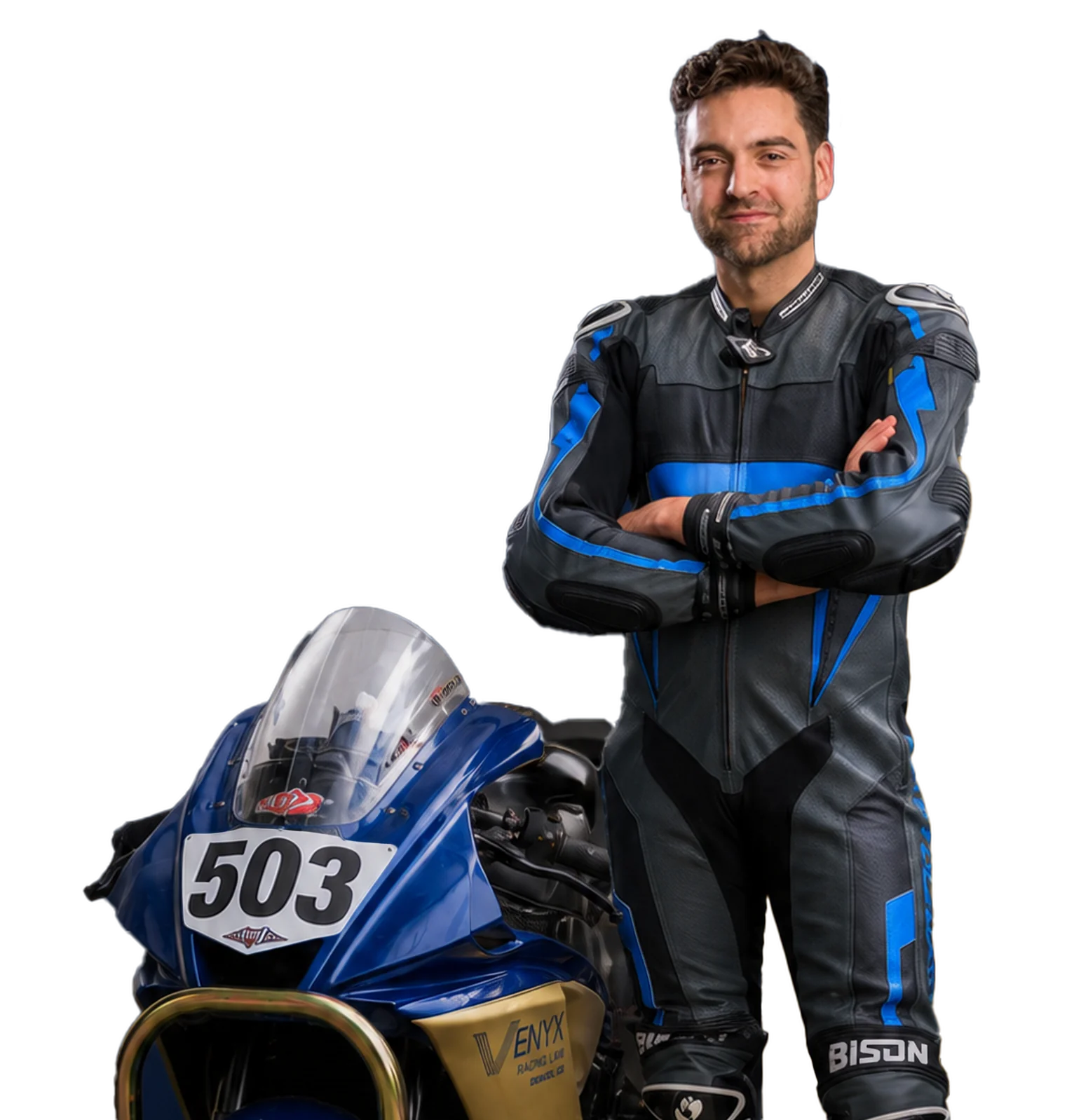
Hiring a lawyer who doesn't ride is like hiring a mechanic who doesn't drive. 2023 MRA Novice GTU Season Champion. Lower fee. More of your recovery in your pocket.
Insurance companies are quick to write a check for the metal, but they fight hard to underpay the rider. We force them to account for the true cost of your injuries, pain, and lost wages.
We know the difference between reckless riding and a driver failing to yield. We leverage real-world riding experience to defend you against biased adjusters and attorneys who automatically assume the motorcyclist was speeding.
Standard lawyers don't understand counter-steering, braking thresholds, or high-side physics. We do. We use this technical knowledge to dismantle the defense's arguments and scientifically prove you were not at fault.

Insurance adjusters, defense attorneys, and police officers often have an inherent bias against motorcyclists. They assume you were speeding. They assume you were reckless. Most lawyers don't push back, because they don't know enough about the bike to know what really happened.
I've been riding motorcycles my entire life. I started on dirt, then street and cruisers, and now my current passion: riding and racing on the track. In 2023, I won the MRA Novice GTU Season Championship. I know that you can do everything right, wear the gear, choose the perfect line, ride defensively, and still be invisible to a driver looking at their phone.
I've also been on the other side of this. I know what it feels like to be seriously hurt doing something you love, and what the road to recovery actually looks like. I use that experience to reconstruct crash dynamics that police reports often miss, so you aren't blamed for someone else's mistake.
Read Dylan's crash storyEvery major insurer maintains internal records on the attorneys they deal with. They track who files lawsuits and who folds at the negotiating table. That reputation follows every case before a single demand letter goes out.
"Settling isn't the goal. The best possible recovery is the goal. Sometimes those are the same thing. Sometimes they're not. The insurance company already knows which kind of attorney they're dealing with before you walk in the door." Dylan Unger, Founder, VENYX Injury Law
Nearly every injury firm charges a percentage of your recovery. The difference is what percentage they charge. We are transparent with our fees. Most firms tend to hide theirs.
Lower overhead means a lower fee, not a lower standard. The firm never makes more than the client.
*Venyx fee structure: 29% standard, 33% if a lawsuit is filed. Client is responsible for case costs. Calculator figures are estimates only; actual fees are discussed at consultation, and your final recovery is also reduced by case costs, medical liens and other legal obligations. Every case is different.
A driver fails to see you and turns left directly into your path. We prove right-of-way violations and fight the speeding narrative insurers always raise.
Learn moreDrivers merging without checking blind spots. We analyze impact points, damage patterns, and signal data to prove you were established in your lane.
Learn moreDrivers following too closely or texting at red lights. Even low-speed rear impacts can cause serious spinal injuries. We counter the "fender bender" argument.
Learn moreRed light runners, stop sign violations, and failure to yield. Intersections account for 37% of fatal motorcycle crashes. We build the case from physical evidence before it disappears.
Learn morePotholes, construction debris, unsecured loads, and defective road surfaces. Liability may fall on a government entity, a contractor, or another driver, and each path has different deadlines and rules.
Learn moreA driver hits you and disappears. Your own UM coverage, MedPay, and a fast push to preserve nearby camera footage are how we build the case even when the at-fault driver is never found.
Learn more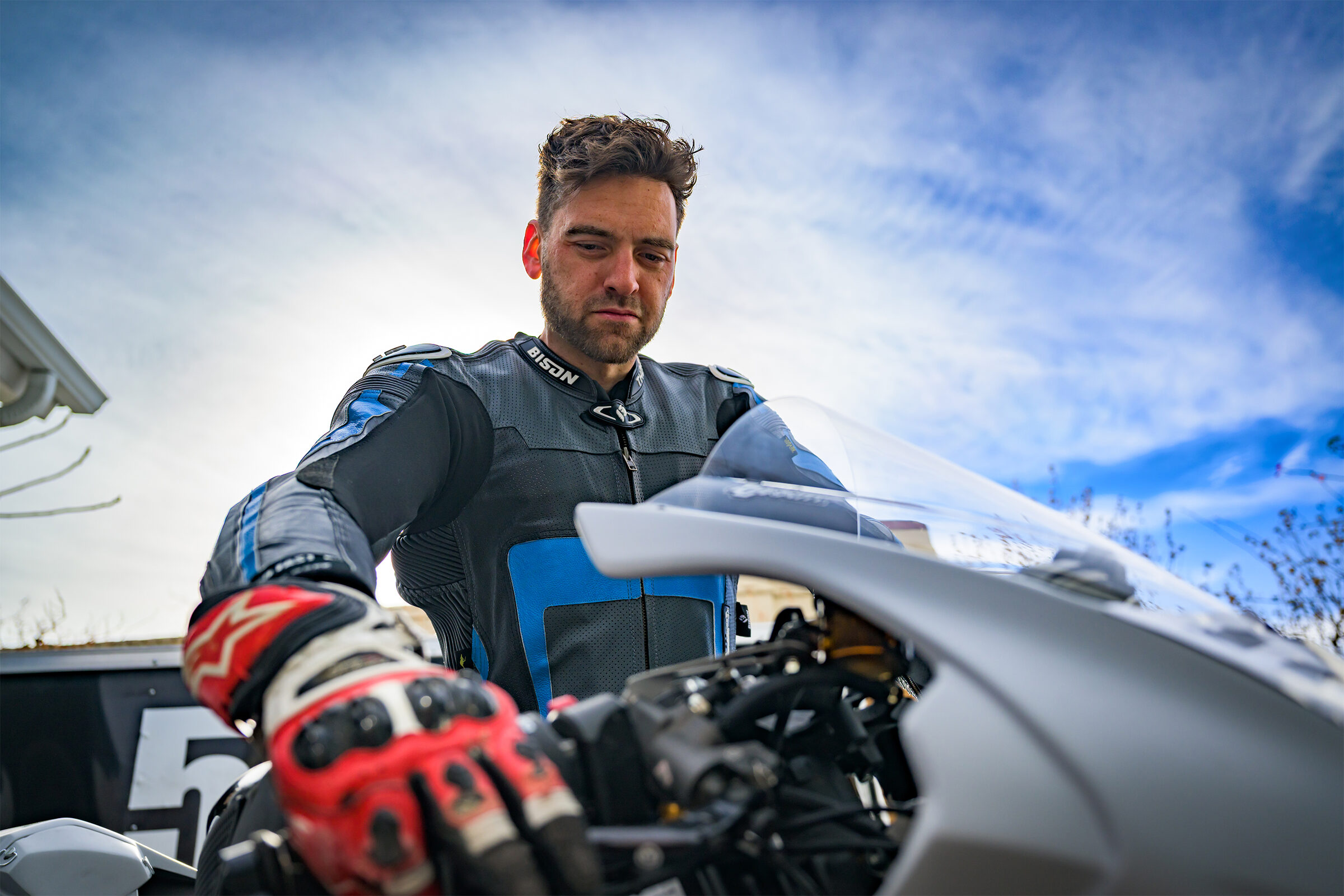
Dylan competes with the MRA, coaches at the MRA New Racer School, and has spent years in the Colorado motorcycle community, on track, in the paddock, and in the pits. When you call VENYX, you're talking to someone who has ridden the same roads, made the same judgment calls at speed, and understands what it means to be seriously hurt doing something you love.
2023 Novice GTU Season Champion. Dylan also coaches students at the MRA New Racer School, putting new competitors through the fundamentals of racecraft and, more importantly, how to stay upright when things go wrong at speed.
Years of racing and riding in Colorado means real relationships, with trackside vendors, repair shops, and the people who actually work on bikes. That network is part of what you get when you hire VENYX.
A motorcycle accident case is only as strong as the experts behind it. Dylan has spent a decade building those relationships across Colorado, deepened further through the racing community.
Experts who understand motorcycle dynamics, not just generic crash physics. Counter-steering, braking thresholds, sight lines, and road surface conditions all factor into how a crash is reconstructed for a jury.
Colorado's best trauma physicians and orthopedic specialists, experienced in documenting rider injuries accurately, including TBI, brachial plexus damage, and the long-term implications of lower-extremity trauma.
Through years of racing, Dylan knows the repair shops, trackside technicians, and mechanical experts who can document what a crash actually does to a motorcycle, which matters when the defense disputes the severity of the impact.
The first 24-72 hours after a crash are the most critical, both for your health and your case. Follow this protocol.
Even if you feel fine. A police report is the foundation of your claim. Without one, it's your word against the other driver's.
Leave it exactly where it stopped. Its resting position documents the physics of the crash. Let police photograph the scene first.
Photograph the other vehicle, plates, road surface, skid marks, traffic signals, your bike, your gear, and your visible injuries.
Ask bystanders for their name and phone number. Witnesses leave quickly. Their account can be decisive when liability is disputed.
Adrenaline affects perception. Anything you say at the scene can be used against you. Let the evidence determine fault.
Adrenaline masks pain. TBI and internal injuries often don't appear for hours. A gap in medical care is used by insurers to argue your injuries weren't serious.
Not your auto insurance. Billing auto insurance directly can reduce your final settlement through medical liens.
You have no obligation to give a recorded statement before consulting an attorney. One poorly worded sentence can undermine your entire case.
Do not repair or discard your helmet, jacket, or boots. Damage patterns on your gear are evidence that corroborates your account of the crash.
First offers are made before your injuries are fully known. They are almost never fair. Call 877-2929-LAW before you sign anything.
This isn't just a scrape. Severe road rash can lead to infection, permanent scarring, and painful skin graft surgeries. We demand compensation for the disfigurement, not just the medical bill.
When a rider instinctively throws an arm out to break a fall, it can tear the nerves in the brachial plexus. This can lead to permanent paralysis or loss of function in the arm.
Legs and feet are often the first point of impact. We represent riders suffering from crushed ankles, shattered femurs, and knee damage that threatens their ability to walk or ride again.
Even with a high-quality helmet, the G-force of a crash can cause brain injury. We understand the physics of helmet impact and how to prove injury even when the CT scan looks "clean."
Riders are exposed to direct impact that car drivers aren't. We represent victims facing partial or complete paralysis, fighting for the lifetime care costs, home modifications, and lost earning capacity that these catastrophic injuries demand.
Impact with the handlebars, fuel tank, or the road often causes broken ribs or collapsed lungs. These injuries can be life-threatening and require long recovery periods. We ensure the compensation reflects the severity of this trauma.
In cases involving drunk driving, extreme recklessness, or intentional misconduct, Colorado courts may award punitive damages, additional amounts designed to punish the at-fault party. These are separate from and in addition to your compensatory damages.
If you were hurt in Denver, your crash location matters to your case. Traffic patterns, road design, prior incident history, and sight lines all factor into establishing liability.
Denver's busiest highway is its most dangerous stretch for riders. High speeds, aggressive lane changes, and complex merges between the I-25/I-70 interchange and Tech Center create constant hazards. Left-turn and rear-end collisions are most common.
One of the longest continuous streets in America is also one of Denver's highest-crash corridors for motorcyclists. Cross-traffic, pedestrians, and drivers turning from side streets without checking create unpredictable exposure throughout.
A convergence of downtown traffic, elevated speeds, and tight interchange geometry. Sideswipe and lane-change collisions are disproportionately common. Curves and ramp stacking reduce sight distances and reaction time.
High-volume commercial corridor with constant stop-and-go traffic, delivery vehicle conflicts, and aggressive driver behavior. Rear-end collisions and failure-to-yield crashes at controlled intersections are frequent.
A mix of tourists, ride-share pickups, delivery trucks, and distracted commuters creates unpredictable conditions. Curved geometry through Lincoln Park reduces sight distances and leaves riders exposed.
Primary north-south arterials with consistent conflicts between through-riding motorcyclists and cross-street vehicles. South Broadway's bar district creates elevated risk evenings and weekends.
Often, yes. Adjusters lean on assumptions about riders: that you were speeding, weaving, or riding aggressively. I ride and I race, so I know what those claims actually require and where they fall apart. I reconstruct what happened so you aren't blamed for a driver's mistake.
Nothing upfront, and no attorney's fee unless we recover for you. My fee is 29% pre-litigation and 33% if we sue, compared to the 33-35% and 40-45% most Colorado firms charge. At every fee level, the firm never makes more than the client. See exactly how our fee works.
For most motorcycle crashes, Colorado's statute of limitations is three years from the date of the crash. If a government entity is involved, such as a city vehicle or a dangerous road condition, you generally must give written notice within 182 days. Don't wait on either deadline. Evidence disappears and witnesses forget long before the clock runs out.
Colorado does not require helmets for riders 18 and older. Insurers may still bring it up, but not wearing a helmet does not by itself bar your recovery. The question is who caused the crash. Read more about Colorado helmet law.
Yes, in limited circumstances. Since August 2024, Colorado allows riders to filter between stopped vehicles at 15 mph or less when it is safe to do so. Lane splitting through moving traffic at speed is still illegal. If you were hit while filtering legally, the driver doesn't get to blame you for it. Read the full lane filtering breakdown.
You may have a claim under your own uninsured motorist (UM) or underinsured motorist (UIM) coverage. Colorado has one of the highest underinsured driver rates in the country, and many riders don't find out what their policy covers until after a crash. Your own insurer will still try to minimize the claim, and I handle those claims with the same trial-ready approach as any other case. Is your motorcycle insurance actually enough?
Colorado has no no-fault system, so the at-fault driver's insurer doesn't pay as you go. Bills are usually covered first by your MedPay coverage if you have it, then by health insurance, and those payers are reimbursed from the settlement. For treatment beyond that, some providers treat on a lien and are paid when the case resolves. How MedPay works for riders, and what happens when it runs out.
Often not. Insurers calculate actual cash value from comparables that frequently miss aftermarket parts, upgrades, and what bikes like yours actually sell for in Colorado. You can dispute a lowball valuation with documentation, comparable sales, and an independent appraisal. Why their first check is too low.
Free consultation. Smarter tech. Lower fee. The lawyer who understands the crash, the injuries, and the bike.
Estimates only. Your final recovery is reduced by case costs, medical liens, and other legal obligations. Every case is different. Fees and costs are discussed at consultation.
Get a Free Consultation


