You're riding in your lane, speed legal, position solid, doing everything right. A car in the adjacent lane begins to drift into you. The driver never signaled. Never looked. Never saw you at all. By the time you react, if you have time to react, you're either fighting for traction on the shoulder or you're already down.
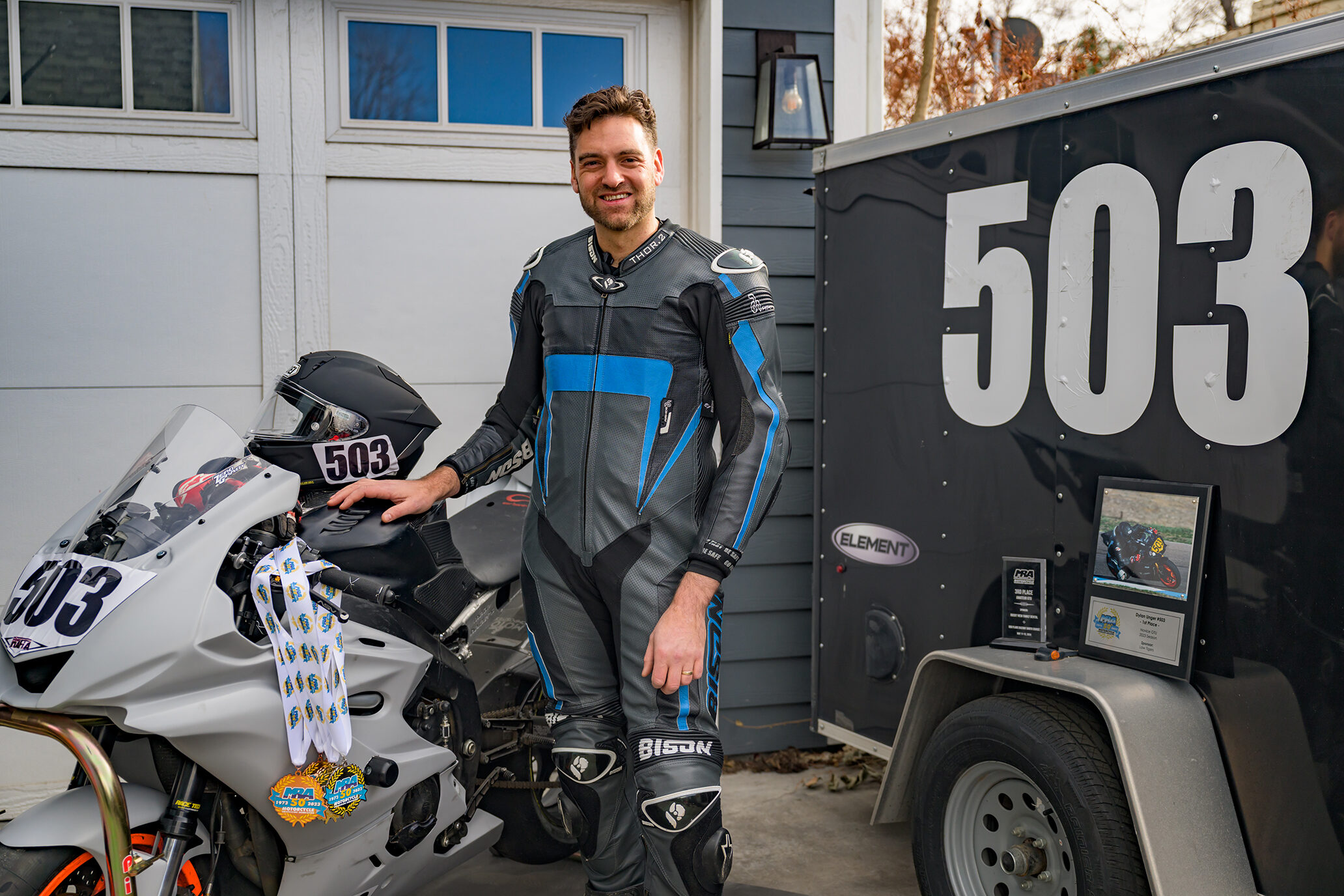
I'm Dylan Unger, a Denver personal injury attorney, licensed motorcycle racer, and 2023 MRA Novice GTU Season Champion. I know how riders position themselves to stay visible, and I know what it means when a driver simply doesn't look.
Here's what you need to know if a lane change crash put you on the ground in Colorado.
The physics and psychology of blind spots create a consistent, repeatable crash scenario that claims riders across Colorado every season.
Every passenger vehicle has blind spot zones that mirrors don't cover, typically along the rear quarter panels on both sides. A driver who checks their mirrors but doesn't turn their head is relying on coverage that doesn't include the most dangerous area for a rider traveling alongside them. Shoulder checks are mandatory by law, not optional.
A turn signal gives a rider the fraction of a second needed to react, to brake, accelerate, or shift position. Under C.R.S. § 42-4-903, drivers are required to signal lane changes with sufficient advance warning to allow other road users to respond. Failure to signal is a statutory violation and direct evidence of negligence.
Even when a driver does glance toward an adjacent lane, they frequently misjudge a motorcycle's speed. Because motorcycles are smaller, the brain processes them as farther away and slower-moving than they are. A driver who thinks a rider is 200 feet back may be looking at a rider 80 feet back and closing fast. The decision to change lanes is made on bad information, but the legal duty is still there.
A driver navigating GPS, adjusting their radio, or glancing at their phone while merging onto I-25 has effectively reduced their field of awareness to the width of their hood. For a rider in the adjacent lane, that moment of inattention is all it takes. Phone records and telematics data are increasingly obtainable in litigation and can directly prove a driver was distracted at the moment of impact.
Lane change crash liability centers on two statutory duties: the duty to check that a lane change can be made safely before initiating it, and the duty to signal. Under C.R.S. § 42-4-1007, a driver may not change lanes until they have determined it can be done safely. Under C.R.S. § 42-4-903, they must signal that change in advance. A driver who moved into your lane without checking and without signaling has violated both duties. Proving it requires evidence, and evidence disappears fast.
Business security cameras and dashcam footage from other vehicles can capture the lane change directly. This footage is typically overwritten within 24 to 72 hours. We send preservation letters immediately to lock it down before it's gone.
Where the impact occurred on both vehicles tells a clear story about direction of travel and lane position. A sideswipe pattern on the left side of a motorcycle and the right rear quarter of a car is strong physical evidence of an unsafe lane change. This gets documented before any vehicle is moved or repaired.
Witnesses who saw the lane change from other vehicles are valuable. Their recollections are most accurate in the first hours after the crash. Getting names and contact information at the scene, before people leave, is critical.
Most modern vehicles have event data recorders that capture speed, steering, and braking in the seconds before impact. Combined with phone records subpoenaed in litigation, this data can directly prove inattention or an abrupt, unsignaled lane change.
The most common defense in lane change motorcycle cases is that the rider was riding in the driver's blind spot and therefore contributed to their own crash. Insurance adjusters raise this to assign comparative fault and reduce the payout.
There are two problems with this argument. First, Colorado law does not require a rider to avoid a driver's blind spot. It requires the driver to check that blind spot before changing lanes. The duty runs to the driver, not the rider. Second, experienced riders actively manage their lane position to stay visible, staying out of blind spots when possible. If the crash happened, it's often because the driver moved faster than the rider could respond, not because the rider chose to be invisible.
Colorado's modified comparative fault rule means any fault percentage assigned to you reduces your recovery proportionally. Under C.R.S. § 13-21-111, if you are found 50% or more at fault, you recover nothing. Keeping that percentage at zero, where the facts support it, is often the entire ballgame in a lane change case.
"As a racer, I understand lane positioning. I know where a rider is visible, where they aren't, and what a reasonable rider does to maximize their visibility on a multi-lane highway. When an insurer tries to use lane position to shift blame onto a rider who was doing everything right, I know exactly how to dismantle that argument." Dylan Unger, Founder, Venyx Injury Law
No. Colorado law requires more than a mirror check, it requires that the lane change can actually be made safely. Checking mirrors without doing a shoulder check is not full compliance with the duty. "I checked my mirrors" is a common statement that doesn't establish the driver did everything required. We challenge it with the physical evidence of where the impact occurred and witness accounts of whether the driver signaled or turned their head.
Physical evidence still tells the story. Vehicle damage patterns, tire marks, the final resting positions of both vehicles, and the police officer's diagram all provide data that a crash reconstructionist can analyze. We've built strong liability cases in lane change crashes with no eyewitnesses by using the physical evidence alone. The absence of camera footage doesn't mean the absence of a case.
Truck lane change cases are more complex and typically higher value. Commercial trucks have significantly larger blind spots than passenger vehicles, and truck drivers operating under commercial licenses are held to a higher standard of care. Truck crash cases also involve federal regulations, the trucking company as a potential defendant, and commercial insurance policies with higher limits. If a truck was involved, get an attorney involved immediately, trucking companies deploy their own investigators quickly.
Three years from the date of the crash under Colorado's personal injury statute of limitations. If a government vehicle was involved, the notice period may be as short as 180 days. The practical answer is to move faster than that. Critical evidence like dashcam footage disappears within days, and the longer you wait, the more the insurer's narrative takes hold.
Yes, and we're ready for it. Lane positioning is one of the first things we document in a lane change case. If you were riding in a position that maximizes visibility, which experienced riders are trained to do, that directly undermines the insurer's blind spot argument. Your riding habits, your gear visibility, and your lane position at the time of impact are all part of the case we build.
Free consultation. The attorney who rides, races, and knows how to dismantle the blind-spot argument before it sticks.
Estimates only. Your final recovery is reduced by case costs, medical liens, and other legal obligations. Every case is different. Fees and costs are discussed at consultation.
Get a Free Consultation


