Colorado law requires drivers to pass cyclists with at least three feet of clearance, and to yield to cyclists in bike lanes, crosswalks, and traffic. When they don't, the cyclist absorbs everything. We use the same statutes the driver violated to build the case, plus every layer of coverage most cyclists don't know they have. Direct attorney access. 29% standard, 33% if we sue.
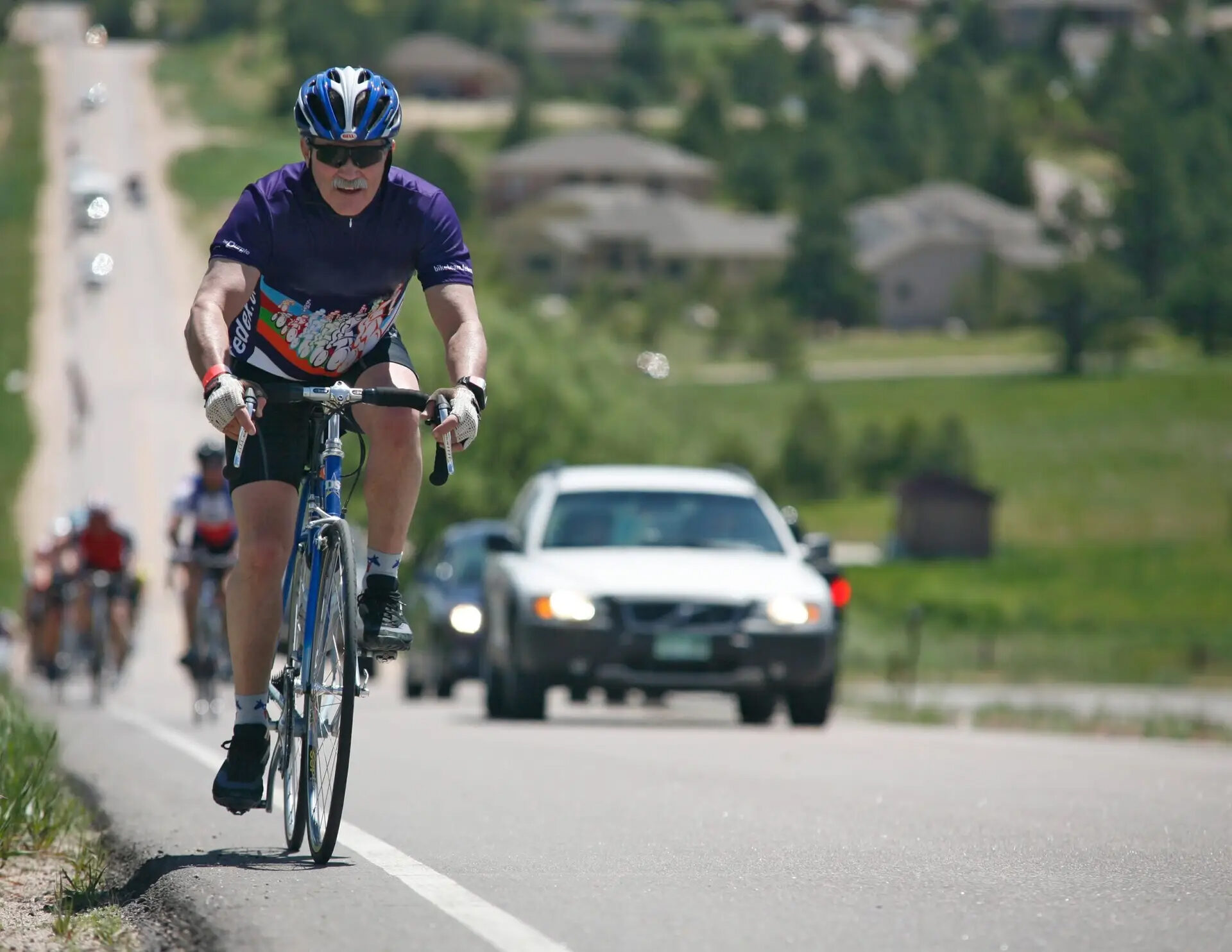
C.R.S. § 42-4-1003 requires drivers to leave at least three feet between their vehicle and the cyclist when passing. Violation is a traffic offense, and powerful negligence-per-se evidence in your civil case. We don't just say the driver "passed too close." We anchor the violation to the statute.
C.R.S. § 42-4-1402.5 gives cyclists, pedestrians, and other unprotected road users heightened protection. Drivers who carelessly injure a vulnerable road user face mandatory enhanced criminal penalties, including license suspension and significant fines. We use this statute as evidence of driver negligence in civil claims.
If the driver fled or carried too little insurance, your own auto-policy Uninsured / Underinsured Motorist coverage applies, even though you were on a bicycle, not in a car. So does Med-Pay coverage on any household policy. Most cyclists don't know this. We map every available coverage source.
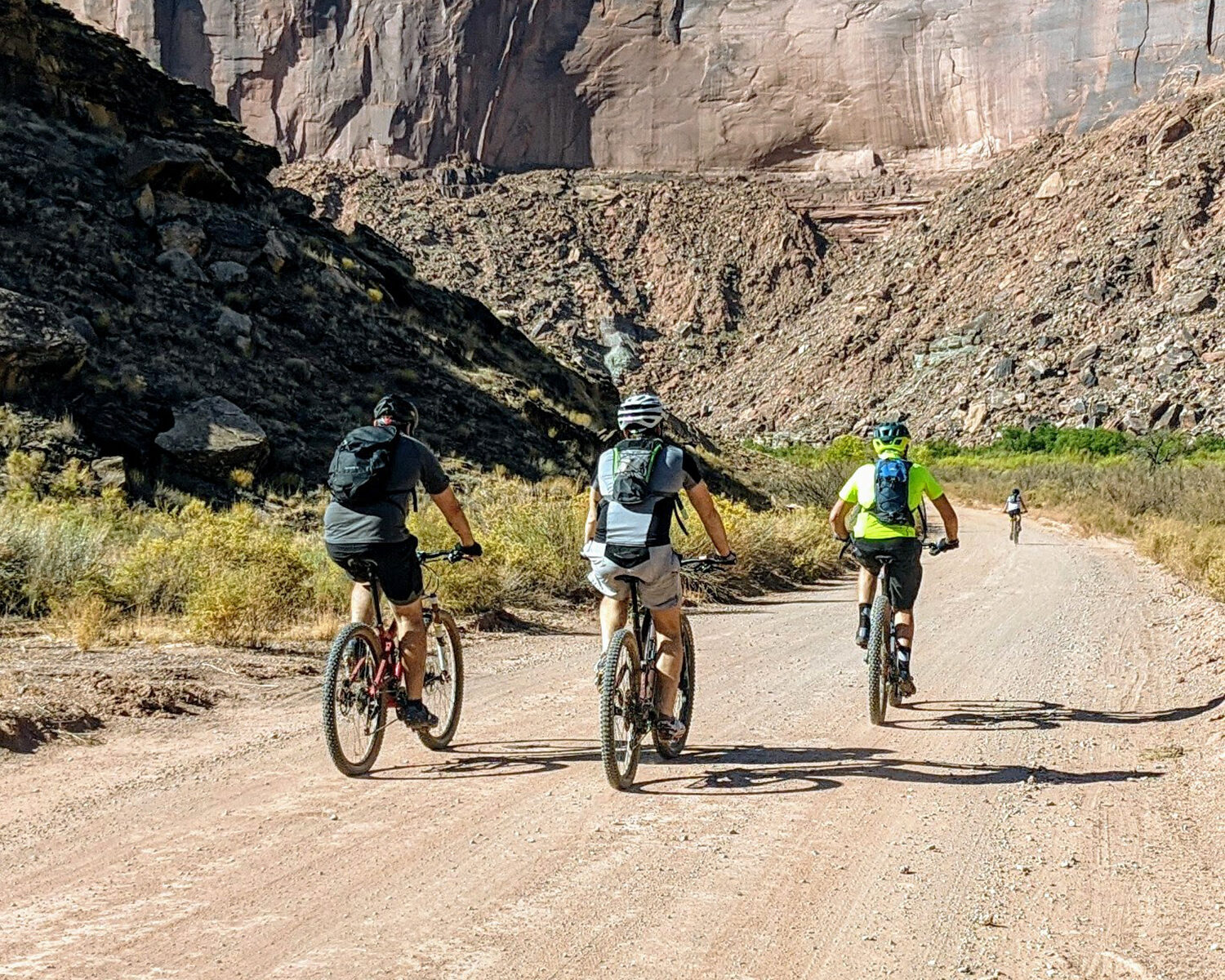
I don't just handle bike cases. I live the lifestyle. From racing downhill and BMX growing up to commuting to work and taking my daughter to school on the bike today, I spend as much time on two wheels as I can. I know the freedom of riding to a Broncos game, and I know the fear of a distracted driver drifting into the bike lane.
When you hire Venyx Injury Law, you aren't explaining "what happened" to a guy in a suit who hasn't ridden since childhood. You're talking to a fellow rider who knows exactly what you're going through and how to fight back. No case managers. No revolving door. I personally handle every part of your case, from the first call to the final demand letter.
I founded Venyx to challenge the settlement-mill model. Most injury firms still operate on bloated staff and outdated systems, and either ignore technology or charge you extra for it. Venyx is built on a modern, digital-first foundation. We don't pay for inefficiency, so neither do you. That's how we deliver elite representation starting at a 29% fee.
Every major insurer maintains internal records on the attorneys they deal with. They track who files lawsuits and who folds at the negotiating table. That reputation follows every case before a single demand letter goes out.
"Settling isn't the goal. The best possible recovery is the goal. Sometimes those are the same thing. Sometimes they're not. The insurance company already knows which kind of attorney they're dealing with before you walk in the door." Dylan Unger, Founder, VENYX Injury Law
Nearly every injury firm charges a percentage of your recovery. The difference is what percentage they charge. We are transparent with our fees. Most firms tend to hide theirs.
Lower overhead means a lower fee, not a lower standard. The firm never makes more than the client.
*Venyx fee structure: 29% standard, 33% if a lawsuit is filed. Client is responsible for case costs. Calculator figures are estimates only; actual fees are discussed at consultation, and your final recovery is also reduced by case costs, medical liens and other legal obligations. Every case is different.
A driver passes a cyclist, then turns right immediately in front of them, cutting off the bike lane. This is the most common car-on-bike crash pattern at intersections and driveways. Drivers blame the cyclist for being "in the wrong place." Colorado law disagrees, cyclists have right-of-way to continue straight in the bike lane.
Talk to DylanA driver coming from the opposite direction turns left across the path of an oncoming cyclist, usually because the driver underestimated the cyclist's speed or simply didn't look. Drivers turning left are required to yield to all oncoming traffic, including bicycles. We use nearby business camera footage, doorbell cams, and crash reconstruction to prove the failure.
Talk to DylanA parked driver or passenger opens their door directly into a cyclist's path. Colorado's "dooring" statute (C.R.S. § 42-4-1407) puts the legal duty on the person opening the door to confirm it's safe first, cyclists are not required to ride outside the door zone to avoid liability. Many cyclists don't know this. Insurance carriers count on it.
Talk to DylanA driver overtakes a cyclist with less than the required three feet of clearance, clipping the cyclist or forcing them off the road. The 3-foot rule (C.R.S. § 42-4-1003) is one of the cleanest negligence-per-se statutes a cyclist can have on their side. We frequently combine it with witness video and vehicle-damage analysis.
Talk to DylanA driver pulls out of a driveway, parking lot, or side street directly into a cyclist's path, often because they only looked for vehicle-sized traffic. These cases turn on the driver's duty to yield to all traffic in the lane being entered, not just the kind they were expecting. Sightline analysis is often decisive.
Talk to DylanWhen a driver flees after hitting a cyclist, the case isn't over. Your own auto-insurance Uninsured Motorist coverage applies even though you were on a bike, and Med-Pay coverage from any household policy stacks on top. We also track down the driver where possible, partial plates, vehicle paint transfer onto the bike, doorbell and traffic-camera networks.
Talk to DylanCyclist cases turn on reconstruction, the right medical proof, and an economic future that accounts for the rider you were before the crash. Dylan has spent a decade building the experts who get this right.
Engineers who reconstruct bicycle-vehicle dynamics specifically, pedal cadence, lane position, braking behavior, vehicle approach angle. Most reconstructionists work car-on-car. The ones we use have testified in cyclist cases and understand how to defeat the "they swerved in front of me" defense.
Colorado's best trauma physicians, neurologists, orthopedic surgeons, and rehabilitation specialists. Cyclist-crash injuries are often severe, TBI even with a helmet, broken collarbones, road rash with long-term scarring, internal trauma. We bring the experts who document the full medical reality.
Forensic economists who calculate lost earning capacity, future medical costs, and the dollar value of long-term impairment, including the loss of cycling itself for competitive riders or commuters. The difference between a "settle for the medical bills" offer and a full recovery.
Bicycle cases have a built-in disadvantage: the cyclist is usually the more seriously hurt of the two parties, so the driver controls the scene narrative. Acting fast inverts that.
Even if you think you're "okay," request medical evaluation at the scene. Adrenaline masks injuries, cyclists routinely walk away from crashes only to be diagnosed with concussion, fractured ribs, or internal bleeding hours later. A police report and EMS run report are foundational documentation.
The bike's final position, damage pattern, and any paint transfer from the vehicle is critical reconstruction evidence. If safety allows, leave everything where it came to rest until police arrive. Photograph it before anything moves.
Other cyclists, joggers, drivers stopped at the light, and bystanders are often the only neutral voices in the file. Ask anyone who saw the crash for their name and phone number before they continue on. The police report rarely captures all of them.
Driver's name, license, insurance, plus vehicle make, model, color, license plate, and any damage to the vehicle. Photograph the side of the car that struck you, paint transfer to the bike or driver-side damage is direct physical evidence of the impact angle.
Drivers often say things like "you came out of nowhere" or "you should have been in the bike lane" hoping you'll agree or apologize. Don't. Stick to facts about what happened to you, let liability be established by statute and evidence, not by something you said while in shock at the scene.
Concussions, internal bleeding, soft-tissue injuries, and bone fractures often present hours or days after a bicycle crash, especially without obvious external trauma. Full evaluation now creates the medical timeline that ties injuries to the crash. A gap in treatment is the carrier's favorite argument that the injury wasn't related.
The driver's carrier will call within days. You are not legally required to give a recorded statement before consulting an attorney. The first call is designed to elicit something that minimizes the claim or shifts blame onto you, cyclists are particularly vulnerable to "you weren't in the bike lane" framing. Decline politely until you have counsel.
Don't repair the bike, don't throw away the helmet, don't wash the clothing. Cracks in the helmet, damage to the frame, and torn or stained clothing are physical evidence of impact severity. We will photograph and inventory everything, and where helpful retain it for the case file or expert inspection.
Business security cameras, gas station and storefront cameras, doorbell cameras at nearby homes, and other vehicles' dash-cams may have captured the crash. Note which businesses are nearby. Your attorney can request footage, but only if it's identified before recordings are overwritten, sometimes within days.
The sooner an attorney is involved, the better the evidence picture. We track down witnesses, preserve camera footage, document the physical evidence, and identify every coverage source, the driver's liability policy, your own UM/UIM, household Med-Pay. Call 877-2929-LAW for a free case evaluation.
Even with a properly fitted helmet, a cyclist's head can absorb significant force in a vehicle collision, enough to cause concussion, persistent post-concussive syndrome, or severe TBI. Symptoms often surface days later. We work with neuropsychologists and neurologists to document the full lifetime impact.
These are the signature cycling-crash injuries, the instinct to brace with an outstretched arm during a fall transfers force directly into the clavicle, wrist, and shoulder. Many require surgical fixation, weeks off the bike, and months of physical therapy. We document the full recovery cost.
High-speed impacts can compress, fracture, or sever the spinal cord. Lower-energy crashes still produce herniated discs and chronic back pain that compromises mobility, work, and the ability to ride. We pursue full recovery for surgery, ongoing care, and future medical needs.
Severe road rash isn't a scrape, it's an avulsion injury that can require skin grafts, multiple debridement procedures, and long-term scar revision. Permanent visible scarring carries non-economic damages that juries and courts take seriously. We ensure the full measure is pursued.
Handlebar impact to the abdomen and torso impact against pavement can cause ruptured spleen, liver damage, and internal bleeding, sometimes with delayed symptoms. We ensure imaging and trauma evaluation are properly documented so the carrier cannot later claim the damage was pre-existing.
Many cyclists never get back on the bike comfortably after a serious crash. Anxiety in traffic, avoidance of routes, and grief at the loss of a sport or commute that defined daily life are real, compensable injuries. We pursue recovery for the mental toll, not just the medical bills.
In cyclist cases involving impaired driving, hit-and-run, or willful disregard of cyclist-safety statutes (the 3-foot rule, Vulnerable Road User Act), Colorado courts may award punitive damages designed to punish the at-fault driver. These are separate from and in addition to your compensatory damages.
Denver and the Front Range have invested heavily in cycling infrastructure, but the most-used routes are also where bike-car conflicts concentrate. Knowing the crash history of a corridor can shape both liability and damages.
The Cherry Creek Trail is one of the city's most heavily used bike routes, but where it crosses surface streets (Speer, University, Steele), the off-street user suddenly becomes an on-street cyclist. Driver-failure-to-yield crashes at these intersections are a recurring claim type.
Broadway and Lincoln carry high-density commuter traffic with painted (but unprotected) bike lanes through downtown. Right-hook crashes at signalized intersections and dooring incidents along parked-vehicle stretches are common claim patterns.
The South Platte Trail runs the length of the city but is interrupted by surface-street crossings at Confluence Park, the highway underpasses, and the industrial north Denver section. Crashes concentrate where the trail user re-enters traffic.
Boulder is one of the most bike-dense cities in the country, which also means it carries one of the state's highest cyclist crash rates. 28th Street's commercial corridor and the Pearl Street network see consistent driveway-pullout, right-hook, and dooring incidents.
Lookout Mountain, Lefthand Canyon, Coal Creek Canyon, and the Front Range climbs draw road cyclists year-round. Pass-too-close crashes on narrow shoulders and downhill speed-differential rear-end incidents are common, the 3-foot rule is constantly tested on these roads.
High student-cyclist density combined with rideshare drop-offs and rushed campus driving produces consistent right-hook, dooring, and crosswalk-strike incidents. Camera density is also high in these areas, which works in our favor when we move quickly.
Nothing upfront, and no attorney's fee unless we recover for you. My fee is 29% pre-litigation and 33% if we sue, compared to the 33-35% and 40-45% most Colorado firms charge. At every fee level, the firm never makes more than the client. See exactly how our fee works.
Yes. Colorado law requires drivers to leave at least three feet between their vehicle and a cyclist when passing, and allows them to cross the center line to do it when it's safe. A driver who passes too close and causes a crash has violated a safety law, which can be strong evidence of negligence. That's true even if the car never touched you. Read the full breakdown of the 3-foot law.
Often, yes. In Colorado, uninsured and underinsured motorist (UM/UIM) coverage generally follows you as a person, not just your car, so it can apply when you're hit while riding. MedPay may also apply, depending on your policy's wording. Check your declarations page, because these coverages can be rejected in writing. What "full coverage" really includes.
Your own uninsured motorist coverage can still apply to a hit-and-run, and Colorado courts have rejected insurer attempts to require physical contact for UM coverage. Report the crash to police right away, and look for nearby cameras at gas stations, parking lots, and storefronts before footage is overwritten. Hit-and-run and phantom vehicle claims explained.
Yes, as long as your share of the fault is less than 50%. Under Colorado's modified comparative fault rule, your recovery is reduced by your percentage of fault, and at 50% or more you recover nothing. Drivers and insurers are quick to blame cyclists. We answer that with evidence: scene photos, witnesses, video, and bike and helmet damage.
Generally, yes. Colorado treats its three classes of e-bikes much like bicycles on the road, with a few extra rules for Class 3. Your claim works the same way: the at-fault driver's insurance first, then your own UM/UIM and MedPay if they apply. Colorado e-bike, e-scooter, and moped laws.
When a motor vehicle is involved, Colorado's statute of limitations for bicycle injury claims is generally three years from the date of the crash. If a government entity is involved, such as a city bus, a public vehicle, or a dangerous road condition, you generally must give written notice within 182 days. Don't wait on either deadline. Evidence disappears and witnesses forget long before the clock runs out.
Free consultation. Lower fee. Direct attorney access from day one, we know how to turn the 3-foot rule and the VRU statute into a winning case.
Estimates only. Your final recovery is reduced by case costs, medical liens, and other legal obligations. Every case is different. Fees and costs are discussed at consultation.
Get a Free Consultation


