Intersections are the most dangerous places on the road for motorcyclists. A driver runs a red light, blows through a stop sign, or misjudges your speed on a left turn, and in a fraction of a second you're on the ground. These aren't freak accidents. They're the predictable result of drivers who weren't paying attention.
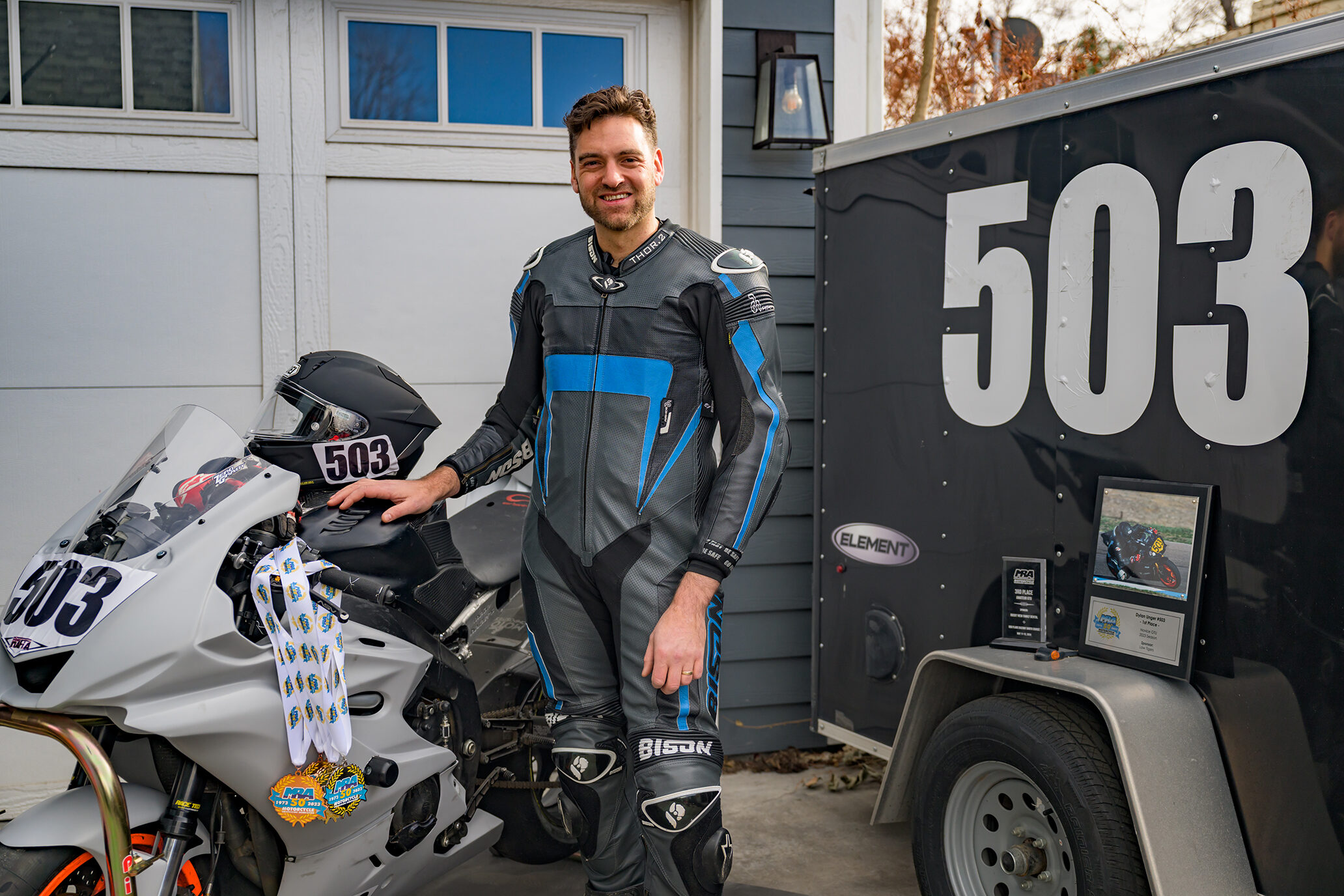
I'm Dylan Unger. I've spent a decade handling motorcycle cases in Colorado, and I've ridden these roads and intersections. I race competitively on the track.
I also know what it feels like to be the one on the ground. I've been through a serious crash myself, including a helicopter transport and surgery. I wrote about it here. I know how these cases work, and I know how insurers handle them.
Most intersection crashes involving motorcycles follow a recognizable pattern. The driver isn't watching the intersection the way they should be, they fail to see the motorcycle or misjudge how fast it's moving, and they act on that bad information.
A vehicle making a left turn across oncoming traffic is the most common motorcycle intersection crash. The driver either doesn't see the motorcycle or assumes they have time to clear before the bike arrives. Under C.R.S. § 42-4-901, a driver making a left turn must yield to any vehicle in the intersection or close enough to be an immediate hazard. That law is clear, and violations create strong liability.
A driver blows through a red light or rolls a stop sign and T-bones you in the intersection. These are often high-speed, high-severity impacts because the vehicle enters perpendicular to traffic. Witness statements, business camera footage, and signal timing records are key evidence in these cases.
At intersections where only some approaches have stop signs, the right-of-way rules are clear, but drivers routinely misjudge crossing traffic, particularly when that traffic is a motorcycle. They'll look and not see you, or see you and misjudge your speed.
A driver waiting to turn right on red looks left for oncoming car traffic, doesn't register the motorcycle approaching from the left, and pulls out directly into your path. These crashes are preventable and the fault is clear.
Drivers are trained to look for cars. Their brains filter traffic by size, and a motorcycle, which occupies a fraction of the visual footprint of a car, often doesn't register the same way. This is called inattentional blindness, and it's documented in traffic safety research. The driver looks directly at you and still doesn't process you as a threat.
None of this makes the crash your fault. You were where you were supposed to be, doing what you were supposed to do. The liability question is whether the other driver failed to yield, failed to stop, or failed to pay attention. In most intersection crashes we see, the answer is yes.
Liability flows from the traffic laws governing intersection conduct. Colorado statutes are detailed about right-of-way, signal compliance, and left-turn duties. When a driver violates those statutes and causes a crash, that violation is strong evidence of negligence, often treated as prima facie proof that they failed to provide the right of way.
C.R.S. § 42-4-901 governs left-turn duties (yield to oncoming traffic). C.R.S. § 42-4-702 and § 42-4-703 govern failure to yield at intersections and stop signs more broadly. Violations of any of these are Class A traffic infractions, and we use them to build the liability case.
Colorado follows a modified comparative fault rule under C.R.S. § 13-21-111. You can recover damages even if you were partially at fault, as long as your fault doesn't exceed 49%. If it does, you're barred from recovery. If it's 49% or less, your damages are reduced by your percentage of fault.
Insurers know this rule and they use it. After an intersection crash, the adjuster will start building a narrative that you were going too fast, you didn't slow for the intersection, or you should have seen the car moving. They don't need to prove you were mostly at fault, they just need to shave your recovery. I've seen them argue comparative fault in cases where business camera footage clearly showed their driver running a red light.
Intersection motorcycle crashes happen across Colorado, but certain Denver corridors and cross-streets see them consistently. If your crash happened on any of these, I've likely handled a case at or near the same location.
One of the longest continuous streets in the country, with dense commercial driveways, heavy turning traffic, and distracted drivers that create constant visibility hazards at nearly every signalized intersection.
High turning volumes at every major cross-street, frequent failure-to-yield crashes, and a road design that puts motorcyclists in conflict with drivers making left turns across multiple lanes.
The I-25 / I-70 interchange is notorious for blind-spot crashes and distracted drivers merging without checking. Surface-street on and off ramps create intersection-like conflict points at highway speeds.
Multi-lane arterials with frequent pedestrian cross-traffic and left-turn pockets where drivers focus on gaps in car traffic and miss approaching motorcycles entirely.
High-volume commercial corridors in the eastern metro with intersections that see consistent failure-to-yield and red-light crashes, particularly during peak commute hours.
A primary north-south arterial through Lakewood, Arvada, and Westminster with a high density of left-turn crashes, particularly at intersections with protected-permissive signal phasing that drivers routinely misread.
This list isn't exhaustive. Intersection crashes happen everywhere across the Front Range, from Colorado Springs to Fort Collins. Location doesn't change the analysis, but knowing the specific intersection helps us identify potential camera sources, get the right police report, and understand the road geometry before we build the case.
Intersection crashes are often easier to prove than other motorcycle cases because the evidence is more likely to exist and be durable. What we look for immediately:
Gas stations, parking lots, and storefronts near an intersection often have cameras pointed at the street. Footage is typically overwritten within days. We move fast to identify and preserve it before it's gone.
Event data recorders in modern vehicles capture speed, braking, and steering inputs in the seconds before a crash. This data can prove a driver didn't slow before the intersection.
Other drivers and pedestrians at the intersection saw what happened. Their accounts, taken close to the time of the crash, carry real weight.
Skid marks, debris fields, final rest positions of both vehicles, and damage patterns tell the story of the impact. The police report is a starting point, not the final word.
Intersection crashes tend to produce serious injuries. A broadside or head-on impact at intersection speeds doesn't give you the same chance a sideswipe does. We routinely handle intersection crash cases involving traumatic brain injuries, spinal injuries, multiple fractures, and road rash requiring skin grafts.
A well-built case accounts for every category of loss:
For a deeper breakdown of how Colorado motorcycle cases are valued, read How Much Is My Motorcycle Accident Case Worth in Colorado?
The first hours after a crash determine how much evidence gets preserved. Do these things if you're physically able to.
Intersection impacts often cause internal injuries and TBI that don't feel severe in the first hours. Document everything through the ER and follow-up care.
Photos of the intersection, the vehicles, your injuries, and any visible skid marks or debris. Note cross-street names and the position of any signals or stop signs.
Names and phone numbers from anyone who saw the crash. Police often don't collect this. It's on you to get it before people leave.
The other driver's insurer will call. You are not required to give them a recorded statement, and anything you say becomes ammunition to reduce your claim. Talk to an attorney first.
Business camera footage is typically overwritten within 48 to 72 hours. The sooner I'm involved, the faster we move to preserve it.
For a full walkthrough of everything you should do in the hours after a crash, read What to Do in the First 24 Hours After a Motorcycle Accident in Denver.
This is one of the most common defenses insurers raise in intersection cases. Colorado's modified comparative fault rule means that even if you were going above the speed limit, you can still recover damages as long as your fault is 49% or less. The key is what the evidence shows. If the other driver ran a red light, camera footage often proves that regardless of your speed. We build the case around the objective evidence, not the other driver's version of events.
Yes. Camera footage is one tool, not the only one. Witness testimony, the police report, vehicle black box data, crash scene reconstruction, and the physical evidence from the vehicles all help establish what happened. Most intersection cases I handle don't have perfect camera footage. We build the case from what exists, and if a jury needs to hear it, we take it to trial.
Early offers are almost always low. Insurers make them before the full picture of your injuries is clear, because once you sign a release, the case is closed. If you have ongoing treatment, unresolved injuries, or any chance of future complications, that settlement amount doesn't account for any of it. A consultation with me is free. Let me look at what they're offering before you agree to anything.
Venyx charges 29% if your case settles before litigation, and 33% if we file a lawsuit. Most Denver firms charge 33% before filing and 40% in litigation. You pay nothing unless we recover for you. The difference in our fee structure means thousands more in your pocket on cases of any size.
Free consultation. The attorney who rides, races, and knows how to move fast on camera footage before it's overwritten.
Estimates only. Your final recovery is reduced by case costs, medical liens, and other legal obligations. Every case is different. Fees and costs are discussed at consultation.
Get a Free Consultation


