A driver hits you and disappears. You're on the ground, your bike is down, and the person who caused it is already gone. The instinct is to assume there's nobody to hold responsible. That assumption is usually wrong.
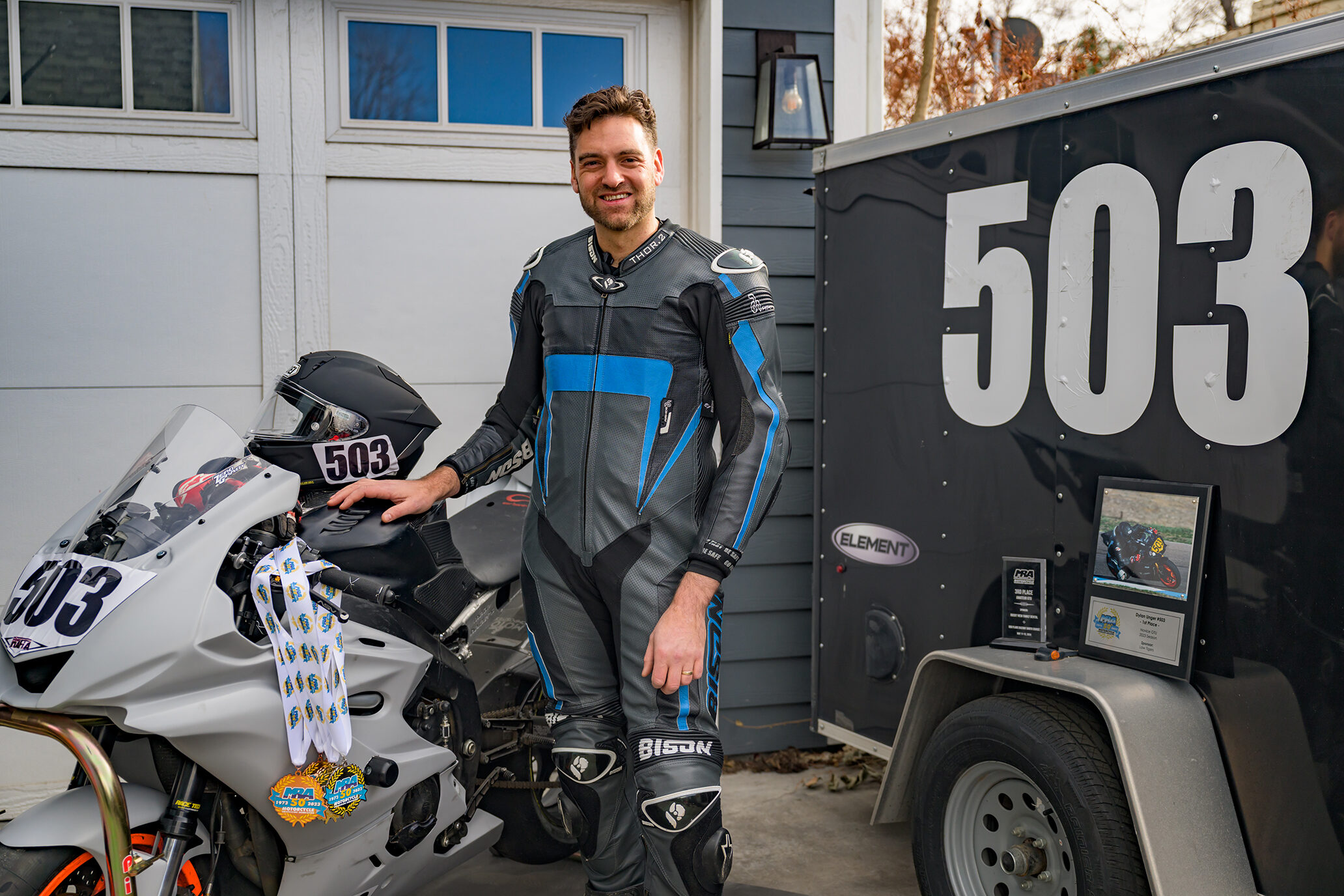
I'm Dylan Unger. I've been practicing personal injury law in Colorado for a decade and I race motorcycles competitively. I know how insurers approach hit-and-run claims, and I know how to push back.
My fee is 29% pre-litigation and 33% if a lawsuit is filed, compared to the 33-35% and 40-45% most Colorado firms charge. If a driver hit you and ran, here's what you need to know.
Motorcycles are smaller and harder to track than cars. A driver who clips a motorcycle and keeps going may believe, correctly, that no witnesses caught their information. These are the patterns we see most often in Colorado.
A driver merges into your lane without checking, forces you off the road or into a slide, and accelerates away before you can recover. Often happens on I-25, I-70, and C-470 during heavy commute traffic. Witnesses are usually moving too fast to catch the plate.
A driver turns left in front of you at an intersection, the impact happens, and they panic and leave the scene. A variation of the most common motorcycle crash type, made worse when the driver doesn't stay. Intersection cameras and nearby business footage often capture these crashes, if it's preserved in time.
A driver or passenger opens a door into your path, you go down, and they leave before you can get up and get their information. Common in Denver's lower downtown, Capitol Hill, and RiNo corridors. At urban speeds the injuries are still significant, especially head and shoulder trauma.
A vehicle rear-ends you at a stoplight or in slow traffic, then uses surrounding cars as cover to slip away. The impact force that would barely dent a car can send a rider to the ground. Soft-tissue and spinal injuries from low-speed rear impacts are commonly downplayed by insurers, even when the at-fault driver is identified.
Hit-and-run cases in Colorado typically proceed through one of three paths, and in some cases more than one applies. Which coverage controls depends on your policy, the facts of the crash, and whether the driver is ever identified. A good attorney runs every track at once, because the claims interact.
Colorado requires insurers to offer UM coverage. A hit-and-run driver who was never found counts as an uninsured motorist under Colorado law, meaning your own UM policy can pay for medical bills, lost wages, and pain and suffering up to your policy limit. Some policies include a physical-contact requirement for hit-and-run claims. Whether that requirement is enforceable in your situation is rarely straightforward.
Most riders carry MedPay without fully understanding it. MedPay pays your medical bills immediately, before any fault determination and before a UM or liability claim is resolved. In a hit-and-run where you need surgery or hospitalization quickly, MedPay is often the first coverage that matters. It does not reduce your UM recovery.
More hit-and-run drivers are identified than most riders expect, particularly in urban areas. Nearby business footage from gas stations, parking lots, and storefronts records continuously and is often overwritten within 24 to 72 hours. A single frame capturing the plate can change everything. If the driver is identified, your path shifts to their liability insurance, which is typically a stronger recovery than UM alone.
A UM claim after a hit-and-run surprises most riders because you're making a claim against your own insurance company, the same company you've been paying premiums to for years. In practice, insurers treat UM claims with the same adversarial approach they apply to third-party claims. They will look for reasons to minimize the payout.
The common tactics: disputing the severity of your injuries, questioning whether a hit-and-run actually occurred, invoking a policy contact requirement to deny coverage, and offering a quick lowball settlement before the full extent of your injuries is known. An attorney who handles UM claims regularly knows how to counter these tactics. The insurer's obligation is to pay what the at-fault driver would have owed, up to your policy limit, and that number is often far higher than the initial offer.
When your own insurer handles your claim in bad faith, including unreasonable delays, wrongful denials, or settlement offers they know are inadequate, you may have a separate claim beyond the underlying UM recovery. Colorado law allows for additional damages when an insurer fails its duty of good faith and fair dealing.
"Insurers know which attorneys file lawsuits and which ones settle for whatever's offered. After 10+ years of injury work and 300+ lawsuits filed, I'm not a name adjusters treat lightly. That reputation affects what you're offered before we ever file." Dylan Unger, Founder, Venyx Injury Law
Hit-and-run cases are valued by what coverage applies, what the injuries demand, and whether the driver is ever identified. Six factors drive case value.
Past bills and future treatment costs, including surgery, physical therapy, specialist visits, and any long-term care needs from permanent injuries.
Wages lost while you were recovering, plus diminished earning capacity if your injuries affect your ability to work at the same level going forward.
Non-economic damages for physical pain, emotional distress, loss of enjoyment of life, and the impact on your relationships and daily function.
Your bike, your gear, and any personal property damaged or destroyed in the crash. Gear replacement (helmet, jacket, boots) is often overlooked and should be included.
When the driver isn't identified, your own UM coverage caps the recovery. Higher UM limits mean a higher ceiling on what's available. We pull every applicable policy on day one, including resident-relative policies you may not realize stack.
If the at-fault driver is identified, the case shifts to a liability claim against their insurance. That's typically a stronger recovery than UM alone, and may also open commercial-policy paths if the driver was working at the time of the crash.
No case value can be assessed without knowing your specific facts: the coverage available, the severity of your injuries, and whether the driver is ever identified. Hit-and-run cases tend to favor riders who act quickly, preserving footage, opening every coverage path, and making sure no policy is left on the table.
The steps you take immediately after a hit-and-run affect both whether the driver is ever identified and how strong your claim is. Don't wait.
A police report is essential for a UM claim. Most insurers require documented evidence of a hit-and-run, and a police report is the most reliable form. Do not skip this step even if your injuries seem minor at the time.
Color, make, model, partial plate, direction of travel, any distinguishing features. Write it down or record a voice memo immediately. Memory degrades fast after adrenaline, especially when you're injured.
Anyone who saw the crash or the fleeing vehicle is valuable. Get names and phone numbers. Ask if they captured anything on a dashcam. Bystander video has identified hit-and-run drivers in multiple cases.
Gas stations, parking lots, storefronts, and ATMs all record continuously. Camera footage is often overwritten within 48 to 72 hours. The sooner an attorney knows where to look, the better the odds of recovering it. Note every business within a few hundred feet of the crash.
Even if you feel okay, get evaluated. Spinal and soft-tissue injuries from motorcycle crashes routinely present hours after the incident. Gaps in treatment are used by insurers to argue your injuries weren't serious.
Your own insurer will want a recorded statement before paying a UM claim. What you say in that recording directly affects your recovery. Talk to an attorney first.
Yes, in most cases. If you carry uninsured motorist coverage, it applies when the at-fault driver cannot be identified. Your own insurer pays the claim up to your UM policy limit. Colorado law requires insurers to offer UM coverage, though riders can waive it in writing. If you're unsure whether you have it, check your declarations page before giving any recorded statement to your insurer.
It depends on your policy. Some Colorado UM policies include a physical-contact requirement for hit-and-run claims, meaning the fleeing vehicle must have actually made contact with you or your motorcycle. Others do not. There is no single Colorado rule that applies to every policy. If your insurer is using a contact requirement to deny or limit your claim, that's worth having an attorney review, because whether it's enforceable in your specific situation isn't always straightforward.
Colorado's general statute of limitations for personal injury claims is three years from the date of the crash. However, UM claims may have separate notice requirements under your individual policy, sometimes as short as 30 to 60 days after the crash. Review your policy and talk to an attorney early, not at the three-year mark.
Not automatically. Colorado insurers are generally prohibited from raising rates solely because you filed a UM claim for a crash you didn't cause. That said, every insurer and every policy is different. An attorney can help you understand the implications before you file.
If the driver is identified after you've already opened a UM claim, the case typically shifts to a direct liability claim against that driver's insurer. Depending on timing and your policy terms, there may be coordination between the two claims. Having an attorney managing both tracks from the beginning matters here, because the claims interact in ways that can affect your total recovery.
Free consultation. We build hit-and-run claims from your own coverage and push back when your insurer starts acting like the other side.
Estimates only. Your final recovery is reduced by case costs, medical liens, and other legal obligations. Every case is different. Fees and costs are discussed at consultation.
Get a Free Consultation


