A pedestrian against a 4,000 lb car is not a contest. Drivers and their insurers know it, which is why their first move is almost always to blame you. Colorado's Vulnerable Road User law puts the burden where it belongs. We make sure it gets enforced. Direct attorney access. 29% standard, 33% if we sue.
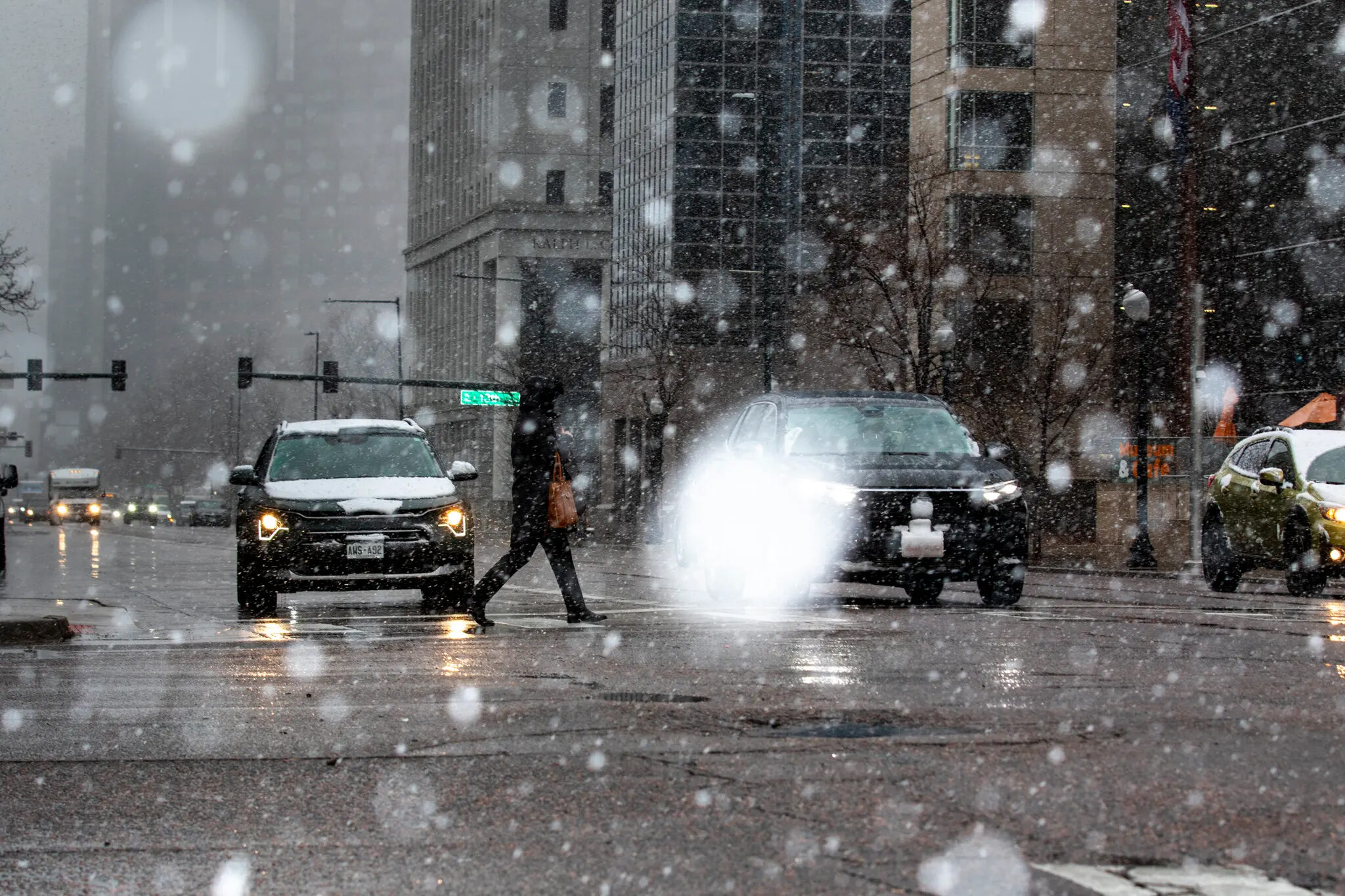
C.R.S. § 42-4-1402.5 gives pedestrians, cyclists, and other unprotected road users heightened protection. Drivers who carelessly injure a vulnerable road user face mandatory enhanced penalties, including suspended license and significant fines. We leverage this statute as evidence of driver negligence in civil claims.
Roughly one in five pedestrian fatalities involves a fleeing driver. Even if the driver is never found, your own auto insurance Uninsured Motorist coverage applies, even though you weren't in a car. Med-Pay coverage from any household policy can also be stacked. Most pedestrian victims don't know this. We find every available source.
Drivers routinely tell police "the pedestrian came out of nowhere", then change the story later. Business security cameras, gas station and storefront footage, doorbell cameras, and other vehicles' dash-cams often contradict that. We identify and preserve footage immediately, most recordings are overwritten within 30 to 60 days, sometimes faster.
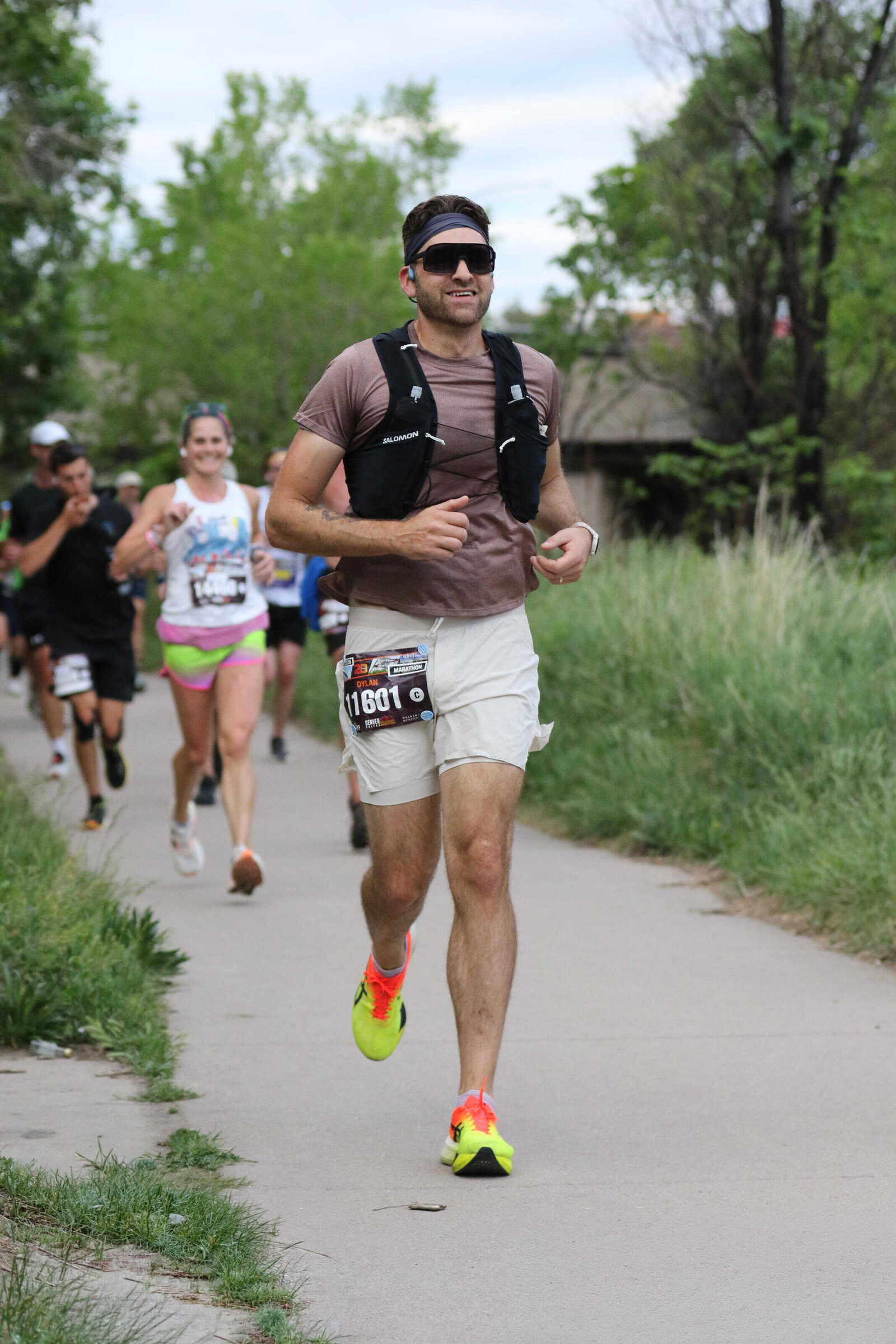
I don't just handle pedestrian cases. I run these streets. I race marathons, including the Colfax, and in 2025 I logged 1,800 miles around Denver on foot. Most of the corridors that show up in pedestrian crash reports are corridors I've personally crossed at every hour of the day. I know the crosswalks where right-on-red turns become right-into-pedestrian turns, and the intersections where you have to make eye contact with every driver to be sure.
When you hire Venyx Injury Law, you aren't explaining "what happened" to a lawyer who only knows pedestrian crashes from case files. You're talking to someone who navigates these crosswalks every day and knows exactly how the driver should have seen you. No case managers. No revolving door. I personally handle every part of your case, from the first call to the final demand letter.
I founded Venyx to challenge the settlement-mill model. Most injury firms still operate on bloated staff and outdated systems, and either ignore technology or charge you extra for it. Venyx is built on a modern, digital-first foundation. We don't pay for inefficiency, so neither do you. That's how we deliver elite representation starting at a 29% fee.
Every major insurer maintains internal records on the attorneys they deal with. They track who files lawsuits and who folds at the negotiating table. That reputation follows every case before a single demand letter goes out.
"Settling isn't the goal. The best possible recovery is the goal. Sometimes those are the same thing. Sometimes they're not. The insurance company already knows which kind of attorney they're dealing with before you walk in the door." Dylan Unger, Founder, VENYX Injury Law
Nearly every injury firm charges a percentage of your recovery. The difference is what percentage they charge. We are transparent with our fees. Most firms tend to hide theirs.
Lower overhead means a lower fee, not a lower standard. The firm never makes more than the client.
*Venyx fee structure: 29% standard, 33% if a lawsuit is filed. Client is responsible for case costs. Calculator figures are estimates only; actual fees are discussed at consultation, and your final recovery is also reduced by case costs, medical liens and other legal obligations. Every case is different.
Colorado law requires drivers to yield to pedestrians in marked and unmarked crosswalks. When a driver fails to yield, usually because they were distracted, looking the other way, or simply impatient, we use nearby business camera footage, "Walk" signal timing, and witness accounts to prove right-of-way and establish negligence per se.
Talk to DylanA driver turning right on red focuses left for oncoming traffic and misses the pedestrian in the crosswalk to their right. Left-turn drivers misjudge the timing of an approaching walker. Both are driver-error patterns we see constantly, and both are usually 100% the driver's fault under Colorado yield rules.
Talk to DylanA driver texting at 25 mph travels 36 feet per second blind. We subpoena cell-phone records, infotainment-system logs, and where applicable BAC results to prove the driver was not paying attention to the road, facts that often unlock punitive damages on top of the injury claim.
Talk to DylanParking-lot crashes are often dismissed as "low speed" but cause real injuries, especially to children, elderly pedestrians, and people whose backs are turned. We pursue the at-fault driver, plus where applicable the property owner if poor sightlines or absent signage contributed.
Talk to DylanDrivers face elevated duties of care in school zones and around children. When the victim is a child, juries are far less forgiving of "I didn't see them" defenses, and damages for future medical needs, lost developmental capacity, and lifetime impact are calculated very differently. We work with pediatric specialists and life-care planners.
Talk to DylanRoughly one in five pedestrian fatalities involves a fleeing driver. Even when the driver is never found, your own auto-insurance Uninsured Motorist coverage applies, most people don't realize this extends to being on foot. We also track down the driver where possible through camera networks, vehicle-debris analysis, and police partnerships.
Talk to DylanPedestrian cases turn on accident reconstruction, thorough medical documentation, and future-cost projections that capture the full arc of recovery from serious impact injuries. Dylan has spent a decade building these relationships.
When a driver claims you "came out of nowhere," physics tells a different story. Reconstruction experts analyze vehicle speed, sight lines, impact points, and braking distances to establish exactly what the driver could see, and when they should have stopped.
A body against a vehicle takes the full force of impact. Colorado trauma physicians, orthopedic surgeons, and neurologists document the head injuries, fractures, and long rehabilitation arcs that follow, establishing the present and future medical needs that directly drive the damages calculation.
Serious pedestrian injuries change how you work and live. Life-care planners and economists project future treatment costs, lost earning capacity, and the real cost of a changed daily life, so your demand reflects what recovery actually takes, not just the bills to date.
Pedestrian cases have a built-in evidence problem: there's no "your driver" to share the burden, so witness identification and camera footage are everything. Most of it disappears in 30 to 60 days.
Even if you think you're "okay," request medical evaluation at the scene. Adrenaline masks injuries. A police report and an EMS run report are foundational documentation, without them the driver's insurer will argue you weren't really hurt.
Your final resting position relative to the crosswalk, lane markings, and signals is critical reconstruction evidence. If you absolutely must move for safety reasons, note exactly where you were and have someone photograph the location before the scene clears.
Bystanders are often the difference between a recovery and a denial in pedestrian cases. Ask anyone who saw the crash for their name and phone number before they walk away. The police report may capture some of them, usually it doesn't. Don't rely on it.
Driver's name, license, insurance, vehicle make, model, color, and license plate. Photograph everything if you can. If the driver flees, capture as much vehicle detail as possible immediately, hit-and-run cases can still be built around a partial plate or distinctive vehicle features.
Drivers often say "I didn't see them" expecting you to apologize for crossing. Don't. Stick to facts about what happened to you, let liability be established by the evidence, not by something you said while in shock at the scene.
Concussions, internal bleeding, soft-tissue injuries, and fractures often present hours or days after the strike. Full evaluation now creates the medical timeline that ties injuries to the crash. A gap in treatment is one of the most common tools insurers use to argue your injuries weren't related.
The driver's carrier will call within days. You are not legally required to give a recorded statement before consulting an attorney. The first call is designed to elicit something that minimizes the claim or shifts blame onto you. Politely decline until you have counsel.
Business security cameras, gas station and storefront cameras, doorbell cameras at nearby homes, and other vehicles' dash-cams may have captured the strike. Note which businesses are nearby. Your attorney can request footage, but only if it's identified before recordings are overwritten, sometimes within days.
Beyond the driver's liability policy, your own auto-insurance Uninsured Motorist coverage often applies even though you weren't in a car, same for Med-Pay coverage on any household policy. Most people leave money on the table because they don't know these stack. We map every available source.
The sooner an attorney is involved, the better the evidence picture. We track down witnesses, preserve camera footage, and ensure the investigation is done right from day one, before the driver's narrative locks in. Call 877-2929-LAW for a free case evaluation.
A pedestrian struck by a car is typically hit twice, once by the vehicle and again by the pavement. TBI ranges from persistent post-concussive syndrome to permanent cognitive, behavioral, and personality changes. We work with neuropsychologists and neurologists to document the full lifetime impact, not just the ER visit.
Even moderate-speed vehicle strikes can compress, fracture, or sever the spinal cord. These cases require a lifetime care plan with adaptive equipment, home modifications, and round-the-clock support. The dollar figure is measured in millions, not thousands.
Pelvis, femur, tibia, and rib fractures are the most common severe injuries in pedestrian strikes. Many require multiple surgeries, hardware installation, and extended physical therapy. We calculate the long-term costs, arthritis, hardware removal, ongoing rehabilitation.
Pedestrian-strike forces transfer directly to internal organs, ruptured spleens, lung trauma, liver injury, internal bleeding. Symptoms can be delayed. We ensure imaging and trauma evaluation are properly documented so the carrier cannot later claim the damage was pre-existing.
Severe crush injuries to the lower limbs are common when a pedestrian is pinned against another vehicle or a fixed object. Surgical amputation may follow. Lifetime prosthetic costs, which need replacement every 3-5 years, plus rehabilitation and mental-health support must be calculated and recovered.
Surviving a vehicle strike often leaves lasting fear of crossing streets, walking near traffic, and being in cars. Anxiety, sleep loss, and avoidance behaviors are real, compensable injuries. We pursue full recovery for the mental toll, not just the medical bills.
In pedestrian cases involving impaired driving, hit-and-run, extreme recklessness, or willful failure to yield, Colorado courts may award punitive damages designed to punish the at-fault driver. These are separate from and in addition to your compensatory damages.
Denver's Vision Zero data identifies the city's "High Injury Network", the small share of streets where the majority of pedestrian deaths occur. Knowing where the crash happened, and its prior record, can shape both liability and damages.
The most documented pedestrian-danger corridor in Denver. High traffic volume, wide crossings, transient pedestrian use, and underbuilt crosswalks combine for a disproportionate share of city pedestrian deaths. Prior Vision Zero designation is admissible evidence the danger was known.
Long stretches with limited crossings, high vehicle speeds, and dense residential and retail uses on either side. Federal regularly appears at the top of Denver's High Injury Network, drivers turning into and out of commercial driveways are a recurring strike pattern.
The north-south one-way pair through downtown carries high commuter speeds through neighborhoods with active pedestrian use. Right-turn-on-red strikes at signalized intersections and mid-block crossings are common pedestrian crash patterns here.
Speer's curves and elevated speeds reduce driver sight distance to pedestrians at the streets that cross it, particularly near the Cherry Creek Trail intersections where users mix on-street and off-street travel. Higher-speed strike, higher-severity injury.
Late-evening and weekend pedestrian density combined with rideshare and impaired-driver traffic produces a consistent stream of crosswalk and mid-block strike cases. Camera density is high here, which works in our favor when we move quickly.
North-Denver industrial streets and the Park Avenue corridor see heavy delivery, freight, and commuter traffic moving through areas with limited pedestrian infrastructure. Strikes here often involve commercial vehicles or trucks turning across crosswalks.
Nothing upfront, and no attorney's fee unless we recover for you. My fee is 29% pre-litigation and 33% if we sue, compared to the 33-35% and 40-45% most Colorado firms charge. At every fee level, the firm never makes more than the client. See exactly how our fee works.
Not always, but in many situations they do. Drivers generally must yield to pedestrians in crosswalks, and to people on the sidewalk when pulling into or out of a driveway, alley, or parking lot. Every driver also has a duty to use due care to avoid hitting a pedestrian. Who had the right of way is usually the central question, and the evidence decides it.
You may still have a claim. Drivers must use due care to avoid pedestrians even outside a crosswalk. Under Colorado's modified comparative fault rule, your recovery is reduced by your share of the fault, and you can recover as long as that share is less than 50%. Insurers will argue you stepped into traffic, so early evidence matters.
The at-fault driver's liability insurance comes first. If the driver has no insurance or not enough, your own uninsured and underinsured motorist (UM/UIM) coverage generally follows you as a person, so it can apply even though you weren't in your car. Many people don't know they have this coverage until they need it. What "full coverage" really includes.
Your own uninsured motorist coverage can still apply to a hit-and-run. Report it to police immediately, and note nearby gas stations, parking lots, storefronts, and homes with doorbell cameras before footage is overwritten. Hit-and-run and phantom vehicle claims explained.
Colorado has no no-fault system, so the at-fault driver's insurer doesn't pay as you go. Bills are usually covered first by MedPay coverage if it applies, then by health insurance, and those payers are reimbursed from the settlement. For treatment beyond that, some providers treat on a lien and are paid when the case resolves. What happens when MedPay runs out.
When a motor vehicle is involved, Colorado's statute of limitations for pedestrian injury claims is generally three years from the date of the crash. If a government entity is involved, such as a city bus, a public vehicle, or a dangerous road condition, you generally must give written notice within 182 days. Don't wait on either deadline. Evidence disappears and witnesses forget long before the clock runs out.
Free consultation. Lower fee. Direct attorney access from day one, before camera footage disappears and witnesses move on.
Estimates only. Your final recovery is reduced by case costs, medical liens, and other legal obligations. Every case is different. Fees and costs are discussed at consultation.
Get a Free Consultation


