A car turns left. The driver looks, doesn't see you, and goes. You have less than a second to react. This is how Colorado riders die at intersections more than any other way, and it happens at every speed, on every road, to experienced riders who were doing everything right.
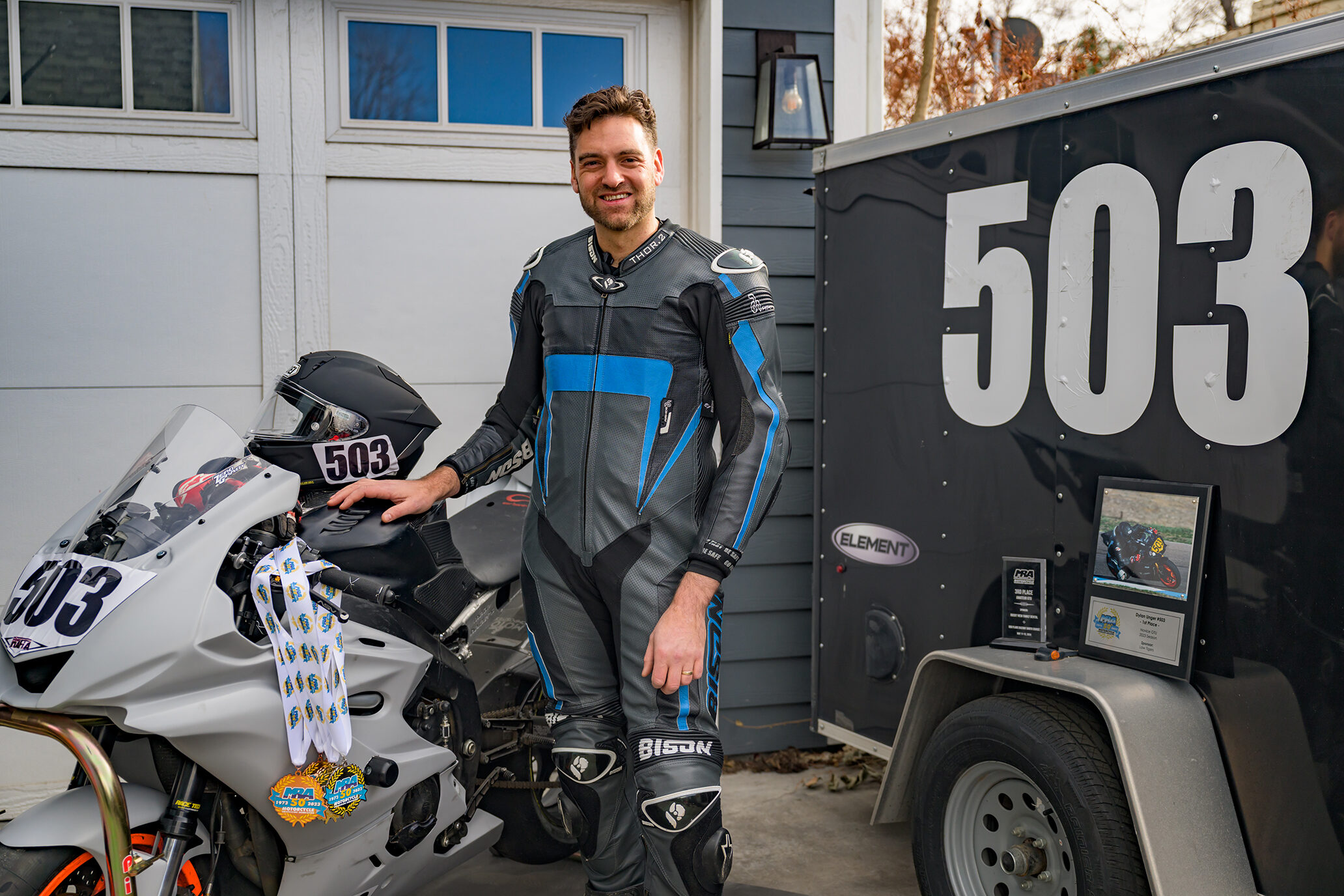
I'm Dylan Unger, a Denver personal injury attorney with 10+ years handling motorcycle accident cases, and a licensed motorcycle racer. When I take on a left-turn crash case, I understand the physics of what happened, I know how insurance adjusters are going to try to blame your speed, and I know exactly how to push back.
If you or someone you love was hit by a driver who turned left into your path, here's what you need to know.
Drivers aren't always reckless. Sometimes they look directly at you and still don't see you. Understanding why helps build your case.
Human brains are wired to detect threats of a certain size. A motorcycle's narrow profile doesn't trigger the same visual alarm as an oncoming car. A driver can look directly at an approaching rider and their brain processes the intersection as clear. NHTSA calls this the "Look But Fail to See" phenomenon, and it accounts for a significant share of left-turn motorcycle fatalities.
Because motorcycles are smaller, drivers consistently misjudge how fast you're approaching and how far away you are. A rider doing 40 mph looks slower and more distant than they are. The driver thinks they have a safe gap. They don't. Insurance companies will try to flip this into a speeding argument, which is exactly backwards from the physics of what happened.
Left-turn crashes happen more often at intersections with obstructed views: a stopped truck in the adjacent lane, a building on the corner, a glare angle that puts the sun directly behind an approaching rider. The driver's view is blocked for a fraction of a second and they commit to the turn. At that point you have nowhere to go.
A driver checking their phone for two seconds at 30 mph travels the length of a basketball court without looking at the road. At a busy Denver intersection, that's more than enough time to miss an approaching motorcycle and initiate a left turn that ends someone's life. Phones can be subpoenaed, and telematics data from the at-fault vehicle is often obtainable.
In the vast majority of left-turn crashes, the turning driver is at fault. Under C.R.S. § 42-4-702, a driver intending to turn left must yield the right of way to any vehicle approaching from the opposite direction that is close enough to constitute an immediate hazard. If a turning driver didn't yield and hit you, they violated that statute. That's negligence per se, meaning their legal duty was established by the traffic code itself, not just by general reasonableness standards. Liability can extend beyond the driver:
If the at-fault driver was working at the time of the crash, making a delivery, running a work errand, driving a company vehicle, their employer may be vicariously liable under the doctrine of respondeat superior. Commercial auto policies typically carry higher limits than personal auto policies.
If poor signal timing, inadequate signage, or a known sight-line obstruction contributed to the crash, a government entity may share liability. Claims against government entities in Colorado carry strict notice requirements, sometimes as short as 180 days, and different damages caps. This angle requires early investigation.
If the driver was impaired and had been over-served at a licensed establishment, that establishment may be liable under Colorado's Dram Shop Act, C.R.S. § 44-3-801. Dram shop claims are time-sensitive and require preserving evidence quickly.
The most common defense in a left-turn crash is that you were speeding, used to push a percentage of fault onto you and shrink the payout. Under Colorado's modified comparative negligence rule (C.R.S. § 13-21-111), if they push you past 50%, you recover nothing. Getting your fault percentage right is often the entire ballgame.
Speed is something you can measure. Crash reconstruction uses crush depth, skid marks, yaw marks, final resting positions, and witness statements to work backward to pre-impact speeds. When that data is preserved and analyzed correctly, it either confirms the speed argument or demolishes it. Insurance adjusters are not engineers. Their speeding claims are often assertions with no technical support, and we challenge them with actual reconstruction evidence.
The other angle: even if you were traveling at the speed limit, the driver's failure to see you doesn't become your fault. The duty to yield belongs to the turning driver. That duty exists regardless of how fast an oncoming vehicle is moving within the legal limit.
"When an insurance adjuster tries to blame your speed, your gear, or your lane position, I know how to respond because I understand how motorcycles actually move through intersections. I race. I've been on the other side of a serious crash. That's not biography. That's case strategy." Dylan Unger, Founder, Venyx Injury Law
Left-turn crashes are high-impact collisions. Even at 30 mph, the forces involved can require surgery and permanent limitations. Six factors drive case value.
Past bills and future treatment costs, including surgery, physical therapy, specialist visits, and any long-term care needs from permanent injuries.
Wages lost while you were recovering, plus diminished earning capacity if your injuries affect your ability to work at the same level going forward.
Non-economic damages for physical pain, emotional distress, loss of enjoyment of life, and the impact on your relationships and daily function.
Your bike, your gear, and any personal property damaged or destroyed in the crash. Gear replacement (helmet, jacket, boots) is often overlooked and should be included.
Colorado's minimum liability limits are low. If the at-fault driver is underinsured, your own UM/UIM coverage becomes critical. We identify every available policy from day one.
Every percentage point of fault assigned to you reduces your recovery. Keeping that number as low as the facts allow is one of the most important things we do.
No case value can be assessed without knowing your specific facts: the insurance available, the severity of your injuries, the strength of the liability evidence, and the comparative fault picture. Left-turn motorcycle crashes tend to produce serious injuries and strong liability, which is a combination that supports full and fair compensation when the case is built correctly from the start.
The first hours determine how much evidence gets preserved. Do these five things if you're physically able to.
You need a police report. The officer's crash diagram and initial fault assessment become part of your case file. Do not leave without getting the report number.
Photos of the intersection, both vehicles, your injuries, skid marks, debris, and the sight lines from the driver's perspective. Get the names and phone numbers of every witness before they leave.
Adrenaline masks pain. Injuries that feel minor at the scene, including concussions, internal bleeding, and soft-tissue damage, can be serious. A same-day medical record ties your injuries directly to the crash.
Not the other driver's insurer, and not your own. Adjusters are trained to get statements that reduce your claim. You are not required to give one before you have an attorney.
Business camera footage from nearby gas stations, parking lots, and storefronts is typically overwritten within 24 to 72 hours. Dashcam footage disappears fast. Skid marks fade. Witness memories fade. The earlier an attorney is involved, the more evidence gets preserved.
"I didn't see them" is not a defense. It's an admission that the driver failed to keep a proper lookout, which is itself a form of negligence. Colorado law requires drivers to exercise reasonable care before turning, which includes making sure the path is clear of approaching vehicles. A driver who looks and fails to see an oncoming motorcycle has still violated their duty of care.
This is one of the most common problems in serious motorcycle crashes. Colorado's minimum liability limits are $25,000 per person, which covers almost nothing in a crash that requires surgery. If the at-fault driver is underinsured, your own uninsured/underinsured motorist (UM/UIM) coverage steps in to make up the difference, up to your policy limits. We identify all available coverage at the start of every case. Learn more about Colorado motorcycle insurance coverage.
Colorado's statute of limitations for personal injury claims is three years from the date of the crash. If a government entity is involved, a city vehicle or a poorly designed or maintained intersection, you may need to file a written notice of claim within 180 days. Missing that deadline typically bars your claim entirely. Don't wait.
Don't respond to that claim without legal representation. The speeding argument is the most common tactic used to reduce fault percentage in left-turn motorcycle cases. A proper crash reconstruction, using physical evidence from the scene, vehicle damage, and road data, can establish your actual pre-impact speed and, in many cases, disprove the assertion entirely. We work with reconstruction experts when the facts support it.
It matters. Left-turn motorcycle crash cases involve specific technical issues, sight distance, approach-speed perception, rider dynamics, gear damage valuation, that a general PI attorney may not be equipped to handle as effectively. Dylan handles motorcycle cases regularly, races motorcycles, and has taken these cases to verdict. When an adjuster tries to blame your gear, your speed, or your lane position, that experience is the difference.
Free consultation. The attorney who rides, races, and knows how to push back on the speeding argument before it sticks.
Estimates only. Your final recovery is reduced by case costs, medical liens, and other legal obligations. Every case is different. Fees and costs are discussed at consultation.
Get a Free Consultation


