A car driver looks down at their phone at a red light. They look up a second too late. The motorcycle in front of them absorbs the full impact. No crumple zone, no airbag, no seat belt. The rider, who did absolutely nothing wrong, is now on the ground with spinal injuries, a totaled bike, and an insurance adjuster already working to minimize the payout.
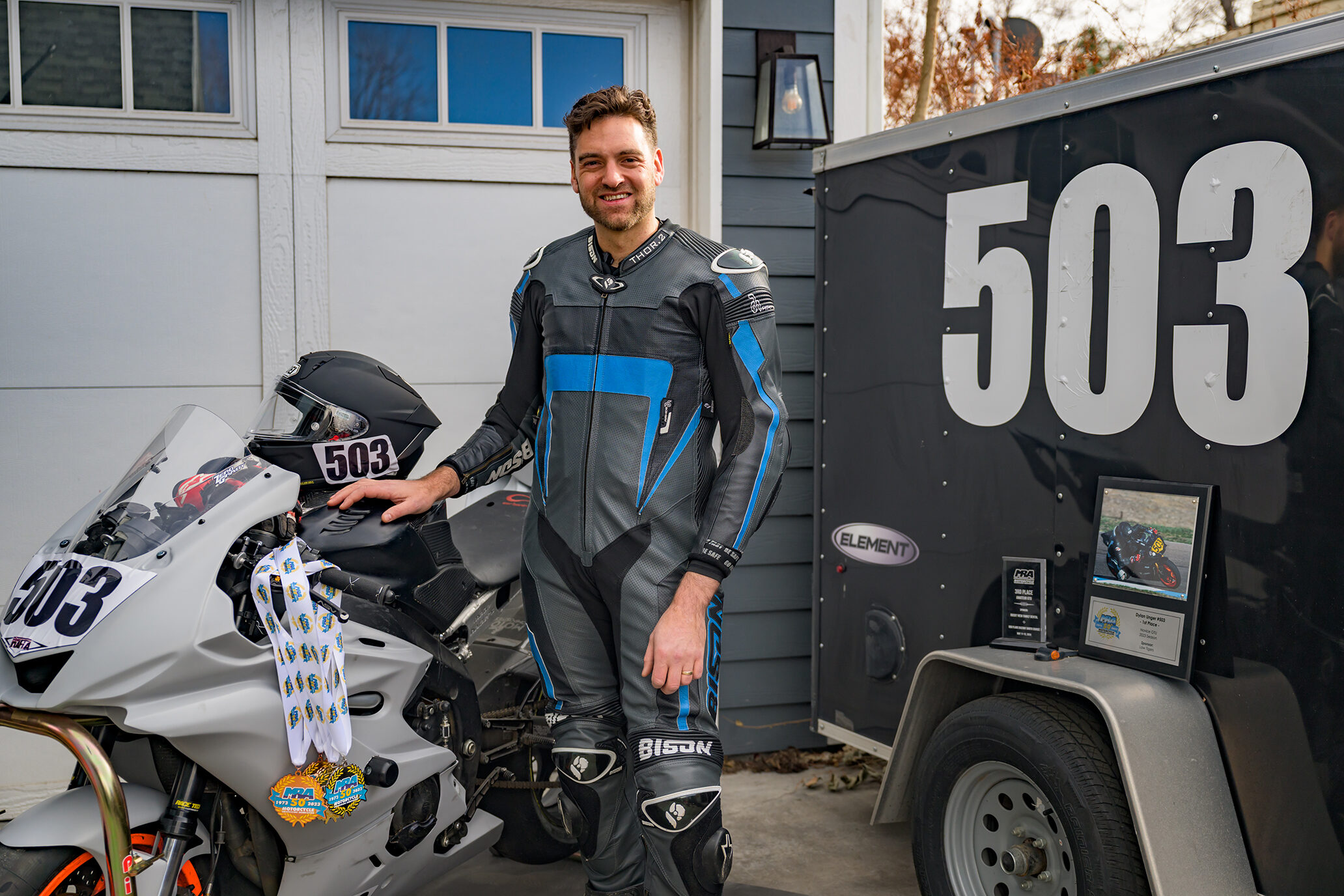
I'm Dylan Unger, a Denver motorcycle accident attorney and licensed racer. I understand how these crashes happen, what the injuries actually feel like, and how insurance companies try to minimize them.
Here's what you need to know if you've been rear-ended on your motorcycle in Colorado.
Almost every rear-end motorcycle crash comes down to driver inattention, following too closely, or a failure to account for how quickly a motorcycle can decelerate. None of these are the rider's fault.
A driver reading a text at 60 mph travels the length of a football field without looking up. At city speeds, even two seconds of distraction is enough to close the gap on a stopped or slowing motorcycle. Distracted driving is now the leading cause of rear-end crashes in Colorado, and phone records, telematics data, and dashcam footage are increasingly powerful tools for proving it.
Colorado law requires drivers to maintain a safe following distance. Most drivers don't. On I-25 and Denver's major arterials, tailgating is endemic. A motorcycle that brakes suddenly, even from a normal hazard like a car stopping ahead, gives a tailgating driver almost no time to respond. The legal standard is clear: the following driver has the duty to maintain a distance from which they can safely stop.
Modern motorcycles stop significantly faster than passenger cars. An experienced rider on a sport bike can shed speed faster than most car drivers expect. When a rider brakes hard and a following driver is tailgating, the gap closes before the driver can react. Insurance companies sometimes argue the rider stopped "too fast," which is not a legally recognized defense. The duty to maintain a safe following distance accounts for the vehicle ahead's braking capability.
Many riders use engine braking and throttle roll-off to decelerate rather than squeezing the brake lever. No brake lever means no brake light. A following driver who expects a brake light before deceleration may not react in time. This is a known dynamic on Colorado mountain roads and canyon descents. It doesn't excuse the following driver, the duty is to maintain distance adequate for any reasonable deceleration, but it's a factor the defense will raise.
In a standard rear-end crash, the following driver is presumed at fault. Colorado law requires every driver to maintain a safe following distance under C.R.S. § 42-4-1008, and a rear-end collision is strong evidence that this duty was breached. That presumption doesn't mean the case handles itself. Insurance companies will look for any way to shift blame, claiming you stopped too suddenly, your brake lights weren't functioning, or you were lane-filtering in a way that contributed. Liability can extend beyond the at-fault driver in several scenarios:
If the driver was working at the time, making deliveries, driving a company vehicle, or running a work errand, the employer may be vicariously liable. Commercial auto policies carry significantly higher limits than personal policies, and the employer's own negligence in hiring, training, or supervision may add a separate claim.
If a brake failure or mechanical defect contributed to the driver's inability to stop, the vehicle manufacturer or a maintenance provider may share liability. These claims require early investigation, the vehicle needs to be preserved and inspected before it's repaired or disposed of.
If inadequate warning signage, a sudden lane drop, or a road condition contributed to the crash, a government entity may share liability. Claims against Colorado government entities have strict 180-day notice requirements, missing that deadline can bar the claim entirely.
When a car rear-ends a motorcycle, the rider has nowhere for the energy to go. No crumple zone, no headrest, no seat belt. The full energy of the collision transfers directly to the rider.
Compression fractures, herniated discs, and in severe cases spinal cord damage causing partial or complete paralysis. The lumbar and cervical spine are most vulnerable in rear impacts.
Even helmeted riders can sustain TBI from the rotational forces of a rear impact. Concussions, post-concussion syndrome, and more severe TBI are common in high-speed rear collisions.
Being thrown from the bike or having the bike pushed into you can crush ankles, shatter femurs, and destroy knees. These injuries frequently require surgery and extensive rehabilitation.
When a rider is thrown from their bike, the resulting slide across pavement can cause deep tissue damage, infection risk, permanent scarring, and in severe cases the need for skin grafting.
Organ damage and internal bleeding may not present immediate symptoms but can be life-threatening. Same-day medical evaluation after any rear-end crash is critical, regardless of how you feel at the scene.
PTSD, anxiety about returning to riding, and depression following serious crashes are real and compensable injuries in Colorado. Non-economic damages include these impacts on your quality of life.
Insurance adjusters are trained to minimize injury severity, particularly for injuries that don't show on immediate imaging. We work with the right medical specialists to document your injuries accurately and establish long-term prognosis, because what you need two years from now matters as much as what you need today.
Even in crashes where liability seems clear, insurance companies rarely just pay. In rear-end motorcycle cases, the most common tactics are predictable, and so are the responses.
The insurer argues the rider's emergency stop was unreasonable and caused the crash. Colorado law does not recognize sudden stopping as a defense when the following driver failed to maintain adequate distance. The duty is on the driver behind, not the vehicle in front, to maintain a safe gap.
A common assertion with no evidence behind it. We document the bike's condition through photos taken at the scene and through inspection of the physical evidence. If the brake light was functional, that claim gets demolished. If the rider was using engine braking, we address the following-distance duty directly.
Low-speed rear impacts get characterized as "fender benders" even when the rider sustained significant spinal or soft-tissue injuries. We counter this with biomechanical analysis where warranted and with thorough medical documentation that connects the mechanism of injury to your specific diagnosis and prognosis.
If you didn't seek immediate medical care, the insurer will argue your injuries weren't serious or weren't caused by the crash. Adrenaline at the scene is real. Getting evaluated the same day, even if you feel okay, protects both your health and your claim.
No. Admissions at the scene are useful evidence, but they don't bind the insurance company. Adjusters frequently reverse the driver's at-scene statement once they review the claim. Get the admission documented, ideally in the police report, but assume the insurer will contest it and build your case accordingly.
Not necessarily. Vehicle damage and injury severity don't always correlate in motorcycle crashes. A motorcycle's rear absorbing a 15 mph impact can transfer significant force to a rider's spine, force that a car's crumple zone would have absorbed in the same scenario. We work with biomechanical experts when insurers try to use "low property damage" to minimize serious rider injuries.
Colorado's lane filtering law became effective in August 2024. If you were filtering legally, between stopped vehicles, at under 15 mph, in a lane wide enough for safe passing, you were lawfully using the road. A driver who struck you from behind while you were filtering legally bears liability for failing to see you. If the filtering conditions weren't met, comparative fault becomes a more complex analysis. Either way, don't assume filtering forfeits your claim, talk to an attorney first.
Colorado's statute of limitations for personal injury claims is three years from the date of the crash. If a government entity is involved, a city vehicle or a road design issue, you may need to file a written notice within 180 days. Don't wait to consult an attorney. Evidence disappears and treatment gaps get used against you the longer you wait.
Colorado's minimum liability limits are $25,000 per person, which doesn't go far in a crash requiring spinal surgery or extended rehabilitation. Your own uninsured/underinsured motorist (UM/UIM) coverage steps in when the at-fault driver's limits aren't enough. We identify every available policy from the start of every case. Learn more about Colorado motorcycle insurance coverage.
Free consultation. The attorney who rides, races, and knows how to stop the insurer from calling a serious crash a "fender bender."
Estimates only. Your final recovery is reduced by case costs, medical liens, and other legal obligations. Every case is different. Fees and costs are discussed at consultation.
Get a Free Consultation


