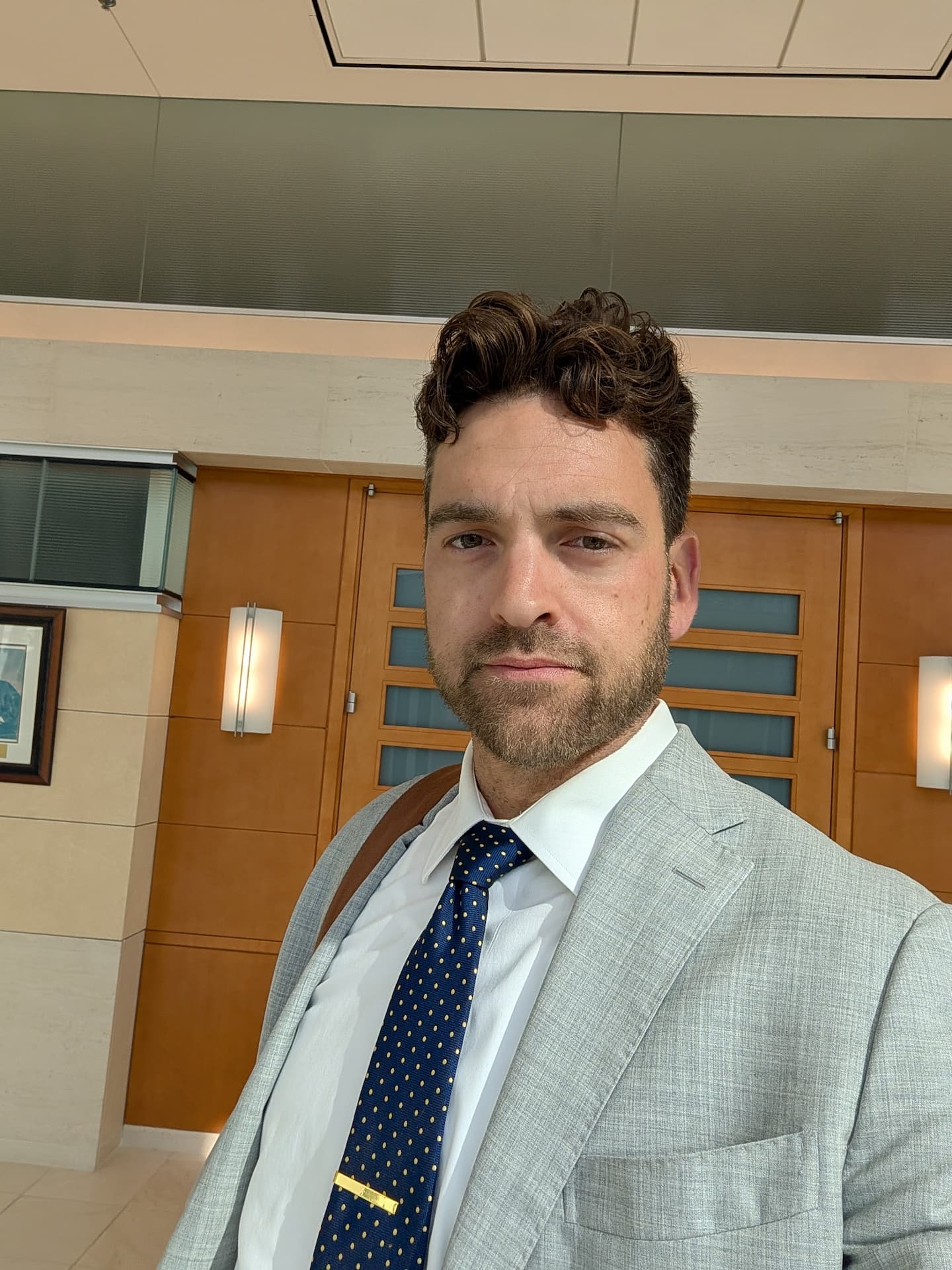
Every motorcycle accident lawyer's website says the same thing. Aggressive representation. Maximum compensation. We fight for riders. None of that tells you anything about whether the person you're about to call will actually help you. I've filed more than 300 lawsuits since 2017, and here's what I've learned actually separates a good outcome from a mediocre one, usually long before a jury ever sees a case.
This is the single biggest predictor of how your case gets treated, and it's the one question most people don't think to ask.
Insurance companies keep internal records on the attorneys they deal with. They track who files suit and who folds at the negotiating table, and that reputation follows every case before a single demand letter goes out. A firm known for settling quickly gets treated accordingly: lower offers, longer stalling, less urgency. A firm known for actually going to court gets a different opening number, because the adjuster knows the alternative is real.
Ask directly: "How many lawsuits have you filed?" Not settlements. Not "cases handled." Lawsuits, filed in court. If the answer is vague, that's the answer.
Filing suit is one thing. Being willing to walk into a courtroom and try it is another. Ask whether the attorney has first-chaired a jury trial, and whether it was in state court, federal court, or both. A lawyer who has only ever negotiated settlements doesn't have the leverage of a real trial threat, and insurance companies can tell the difference.
At a lot of firms, especially the ones with the biggest ad budgets, the attorney whose name is on the billboard is not the person answering your calls. Your case gets handled by a paralegal, then a case manager, then maybe an associate attorney you've never spoken to. That's not necessarily bad representation, but it's not what most people expect when they hire "their" lawyer.
Ask who your direct point of contact will be, and whether that's the same person who will be in the room if the case goes to trial. At a small, tech-enabled firm, that's often the founder himself, answering his own phone.
Nearly every personal injury lawyer works on contingency, meaning they're paid a percentage of what they recover for you and nothing if they don't win. That part is standard. What isn't standard is the percentage, and how clearly it's explained.
Most Colorado firms charge 33 to 35% before a lawsuit is filed, and 40 to 45% once one is. That standard was set decades ago, when case files were paper and every task required a person to do it by hand. Technology has changed what it costs to run a case, but most firms haven't changed their fee to match. A firm running lean, modern case management can pass real savings on to you instead of just absorbing them as overhead. That's the entire logic behind Venyx's fee: 29% pre-litigation, 33% if we sue.
On a $100,000 recovery, that gap is even bigger once a lawsuit is filed. Venyx charges 33% at that stage, compared to the 40 to 45% many firms charge once they're in litigation. At the high end of that range, the difference is $12,000 staying with you instead of going to legal fees, on the exact same recovery. Ask any lawyer you're considering to tell you their exact percentage before you sign anything, and be wary of anyone who's vague about it.
Nearly every injury firm in America works on a contingency fee: the lawyer is paid a percentage of what they recover for you, and nothing if they don't. It's the arrangement that makes hiring a trial attorney possible without hourly bills or upfront costs. The standard contingency fee was set decades ago, back when case files were paper and every task took a person. But as technology has advanced, firms have raised their prices. Today most firms charge 33-35% pre-lawsuit and 40-45% once a lawsuit is filed. They need to cover the offices, staff, and ad budgets that do nothing to win your case.
We saw that as an opportunity. Dylan spent years as a senior attorney at one of Colorado's largest personal injury firms, where he watched that overhead come straight out of client recoveries. He left to do it differently. Venyx runs on modern case management technology; a leaner practice moves faster, works more efficiently, and costs less to operate. We pass those savings to you: 29% standard fee, 33% if we sue. Lower overhead, lower fee, with experienced, trial-ready representation and aggressive fight. You just keep more of your recovery when it's over.
The firm never makes more than the client. At every fee level, you keep more of your recovery than we do.
Venyx fee structure: 29% standard, 33% if a lawsuit is filed. Client is responsible for case costs.
Estimates only. Actual fees are discussed at consultation. Your final recovery is also reduced by case costs, medical liens, and other legal obligations. Every case is different.
Get a Free ConsultationFor motorcycle cases specifically, this matters more than people realize. Insurance adjusters, defense attorneys, and even police officers often carry an inherent bias against riders. They assume speed. They assume recklessness. A lawyer who doesn't ride has to take someone else's word for what actually happened on the bike, and that gap shows up in how hard they push back.
The same principle applies outside of motorcycle cases too. A lawyer who has actually built the kind of case you have, who knows the specific defenses insurers raise for your situation, is worth more than one who handles a little bit of everything.
Reviews aren't the whole picture, but a consistent pattern is worth something. Look past the star rating and read what people actually wrote about responsiveness, communication, and whether the attorney they hired was the one who showed up.
You're not just hiring a law degree. You're hiring a reputation, a willingness to go to trial, and a fee structure that either respects what you're going through or quietly works against it. Ask the questions above before you sign anything. Any attorney worth hiring will have straight answers to all of them.
Talk to the attorney directly, not a call center. Free consultation, no obligation.
Call 877-2929-LAWDoes it cost anything to talk to Venyx?
No. Consultations with Venyx are free, with no obligation to hire the firm. If you're considering another attorney, just ask upfront whether their initial consultation is free, since policies can vary firm to firm.
How do I know if a lawyer actually files lawsuits, or just settles?
Ask directly how many lawsuits they've filed, not cases handled or settled, lawsuits filed in court. A specific number is a good sign. A vague answer usually means the firm rarely goes past the negotiation stage.
Does a higher fee percentage mean a better lawyer?
Not necessarily. Fee percentage reflects a firm's overhead and business model more than its skill or results. A leaner, tech-enabled firm can charge less and still bring the same trial experience and litigation record to your case.
What's the difference between Venyx's fee and the industry standard in real dollars?
On a $100,000 recovery, if a lawsuit is filed, Venyx's 33% fee compares to the 40 to 45% many firms charge at that same stage. At the high end, that's a $12,000 difference staying with you instead of going to legal fees. Use the calculator above to see the difference on your own numbers.
Should I hire a lawyer who rides if my accident involved a motorcycle?
It helps. A lawyer who understands counter-steering, braking thresholds, and how bikes actually behave in a crash is better equipped to push back against the assumption that the rider was speeding or at fault, a bias that shows up often in these cases.
What should I bring to a free consultation?
The police report if you have one, any photos from the scene, insurance information, and a general timeline of your medical treatment so far. If you don't have all of it yet, that's fine, bring what you have.
Here to provide you clear answers about your case.