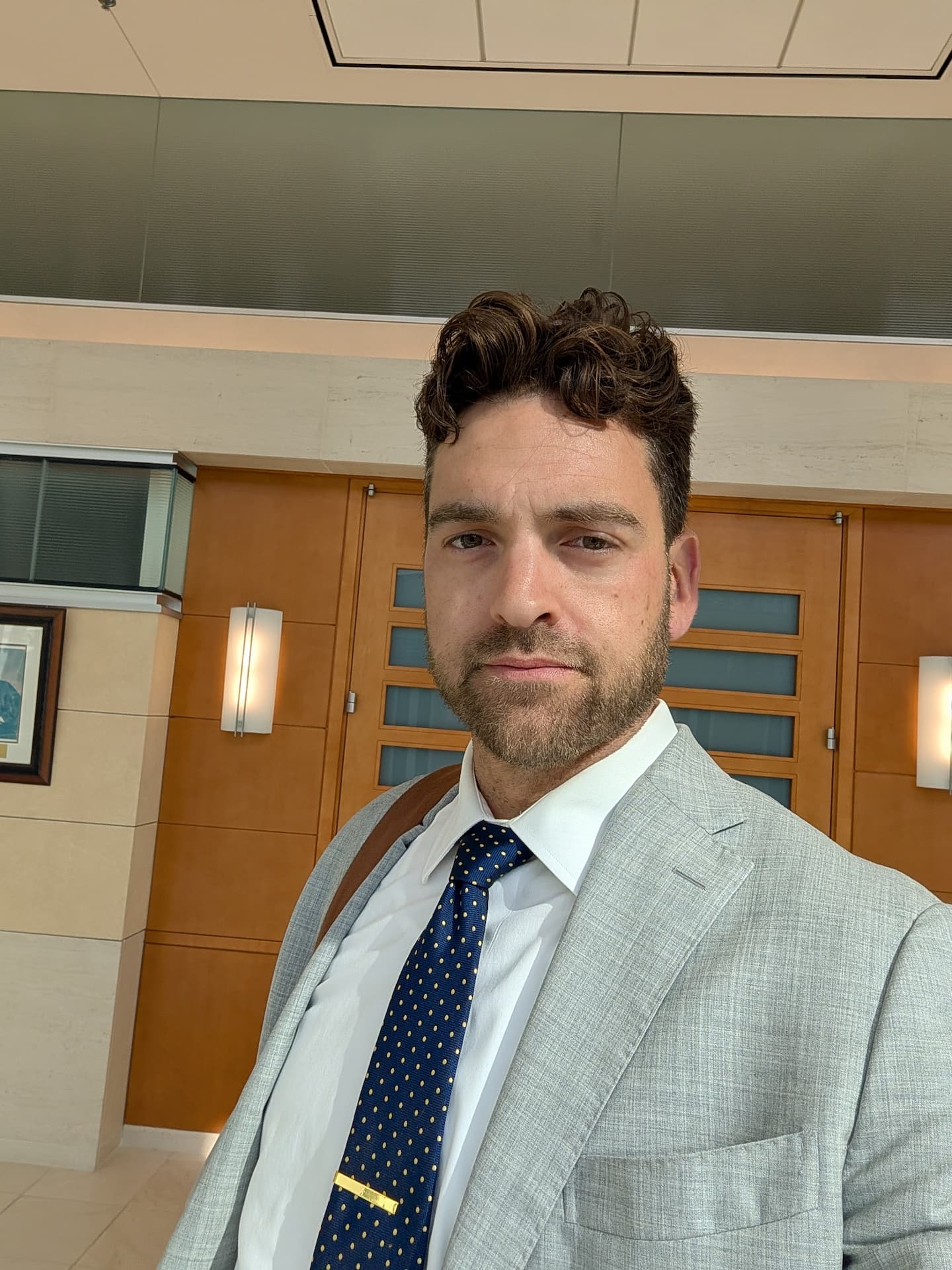
I grew up riding and racing bikes, mountain bikes, road bikes, BMX, downhill, before I ever got behind the wheel of a car. These days I ride an e-bike around Denver more than most people realize, to the office, to Broncos games, taking my daughter to school. So I notice every close pass, and I know the difference between a driver giving a rider room and a driver forcing a rider to make a split-second choice. That little jolt of "did that car really need to be that close" isn't just a feeling. In Colorado, it's the law being broken.
Most drivers have no idea Colorado has a specific passing distance requirement for cyclists, and most cyclists don't know exactly what protection they're entitled to. Both matter, because when a close pass turns into a crash, whether the driver followed this law becomes a central question in the injury claim.
Since 2020, Colorado has recorded 79 bicyclist fatalities, with nearly half occurring during the summer riding season. In 2024 alone, the state reported 14 bicyclist deaths and 224 serious injuries. These aren't abstract numbers. They're the reason this law exists, and the reason it matters when it's ignored. If you or someone you love has already been hurt in a Colorado bicycle accident, the passing distance question below is often central to the case.
Colorado's safe passing statute, C.R.S. § 42-4-1002, requires drivers to leave at least three feet of separation between the right side of their vehicle, including mirrors or any other projection, and a cyclist, at all times while passing.
A few specifics that surprise people:
A companion law, Colorado's Safety Stop, lets cyclists 15 and older treat a stop sign as a yield and a red light as a stop sign once they've confirmed the intersection is clear. It doesn't change a driver's passing obligations, but it's worth knowing because insurance adjusters sometimes try to argue a cyclist was "in violation" for rolling a stop sign when the law says otherwise.
On paper, a violation of the 3-foot law is a Class A traffic infraction, up to a $100 fine and points on the driver's license, even if no crash occurs.
In a personal injury case, it means more than that. Colorado law lets an injured person use a driver's traffic law violation as evidence of negligence. If a driver passed you with less than three feet of space and you went down, the violation itself becomes part of the proof that the driver failed to act reasonably. That's a meaningfully stronger starting position than a generic "the driver wasn't careful" argument.
Some of the worst bicycle crashes I see never involve the car touching the cyclist at all. A vehicle passes too close, the cyclist swerves to avoid it, and goes down hitting a pothole, a curb, or a parked car. No paint transfer, no dent, nothing for the responding officer to point to as proof a violation happened. Having raced bikes for years, I can tell you exactly what that split-second decision looks like from the saddle: you don't get to think about it, your body just reacts, and where you land is whatever the pavement gives you.
Here's the part most riders don't realize: legally, this is the same category of claim as a hit-and-run. The driver who forced you off the road, whether or not they even knew it happened, is what's called a "phantom vehicle" in insurance terms. If that driver is never identified, you don't pursue them directly. You make a claim under your own auto policy's uninsured motorist (UM) coverage, the same coverage that applies if a driver is confirmed uninsured or leaves the scene entirely. Colorado courts have specifically rejected insurer attempts to deny these claims just because there was no physical contact (Farmers Insurance Exchange v. McDermott, 527 P.2d 918 (Colo. App. 1974)), so a no-contact crash is not a legal dead end here the way it can be in some other states.
That doesn't make it an easy claim. Without contact, there's no dent or paint chip, nothing physical tying a specific car to what happened, and insurance adjusters know it. Winning that fight comes down to what you documented at the scene: a witness, debris, nearby camera footage, something independent of your own account. That's exactly why the steps below matter more in a no-contact crash than almost any other type of case. I go into this in more depth, across cars, motorcycles, and pedestrians as well, in Hit-and-Run and Phantom Vehicle Claims in Colorado.
My fee is 29% pre-litigation and 33% if we sue, compared to the 33-35% and 40-45% most Colorado firms charge. Every client gets my direct cell phone number, not a paralegal pool.
Talk to Dylan About Your CaseAt least three feet, measured from the outermost part of the vehicle, including mirrors, to the cyclist. This applies at all times while passing, not just on open roads.
Yes. Colorado law and CDOT guidance both confirm a driver may briefly cross a double yellow centerline to maintain the required three feet, as long as it's safe and there's no oncoming traffic.
You can still have a valid injury claim. Colorado treats this as a phantom vehicle case, pursued through your own auto policy's uninsured motorist coverage, and Colorado courts have specifically rejected insurer attempts to deny these claims just for lack of physical contact. Without contact, though, independent evidence like a witness or nearby camera footage matters enormously. Talk to an attorney before accepting an insurance company's version of events.
Not if you followed it correctly. The Safety Stop law lets cyclists 15 and older treat a stop sign as a yield after confirming the intersection is clear. Insurance adjusters sometimes misstate this law to shift blame. It doesn't reduce a driver's passing obligations.
Here to provide you clear answers about your case.